




Products
Trending searches
Popular collections
Glass Laser Engraving: How to Engrave Glass with Longer Laser Engravers
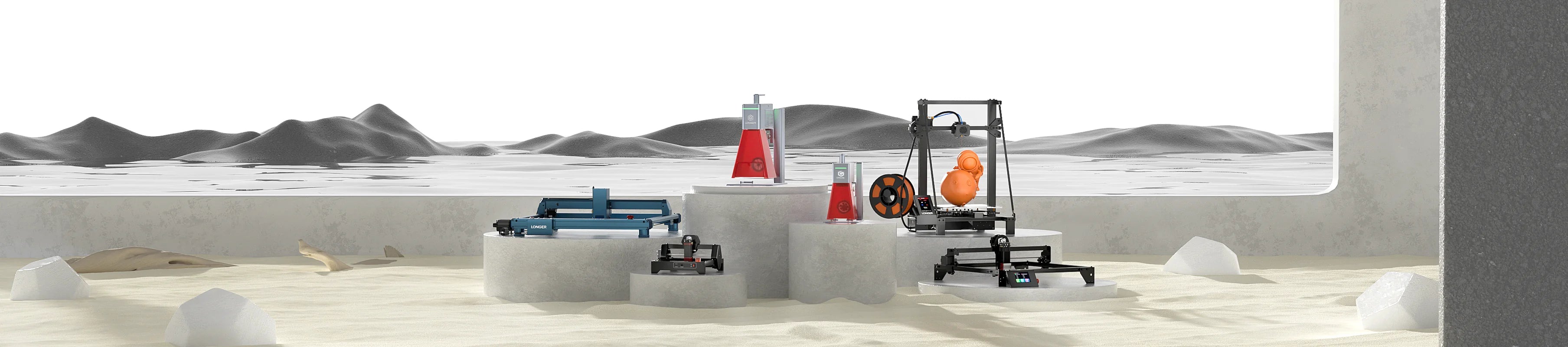
Longer Laser Engravers, such as Longer Ray5, Longer B1, and the Nano series, allow you to create fantastic works of art on a multiplicity and variety of materials. While many users start with wood or cardboard, glass represents a significant step forward in artistic creation. The ability to transform a common transparent object into a personalized masterpiece with a frosted, elegant finish is one of the most rewarding capabilities of these machines.
Why Glass Is a Unique Material for Laser Engraving
The material preferred by users for high-end gifts and decor is usually clear glass, which can be engraved to create a permanent, sophisticated contrast. However, unlike wood or stone, glass is a transparent and reflective medium. This means the laser beam could potentially pass through it or reflect back without leaving a mark. To overcome this, a professional practical solution is to apply a temporary dark coating, such as black tempera, laser spray, or even dark dish soap, to the surface. This allows the laser to absorb the energy and transfer it to the glass, creating a controlled micro-fracture that results in a beautiful "frosted" effect.
Recommended Glass Engraving Parameters for Longer Laser Engravers
Supposing you want to engrave glass, the following can be considered as basic parameters tailored for each specific Longer Laser Engraver model. These settings are designed to balance speed and power to achieve a crisp mark without overheating the material:
- Longer Nano Pro: Power 80% - Speed 3000 (mm/min)
- Longer Nano: Power 100% - Speed 1000 (mm/min)
- Longer B1 40W: Power 40% - Speed 3000 (mm/min)
- Longer Ray5 10W: Power 80% - Speed 3000 (mm/min)
Note: For all models, when available, keeping the Air Assist active is essential. It helps to cool the surface and clear any vaporized residue from the coating, ensuring the laser beam remains focused and efficient.
In this way, the engravings will be carried out without problems, and the high heat generated by the laser will allow the treated areas of the glass to be precisely frosted. However, since glass is sensitive to thermal shock, it is necessary to avoid "over-cooking" a single spot. A practical solution is to use high-speed passes to distribute the heat evenly. Once the process is finished, simply wash away the temporary coating with water to reveal the permanent, millimetric precision of the design.
Creative Effects and Design Possibilities on Glass
An interesting aspect of engraving on glass is the possibility of playing with nuances and light. By varying the power slightly, you can obtain different textures of frosting, creating effects of depth that are particularly striking when the glass is backlit. This makes glass an ideal material for experimenting with complex graphics, corporate logos, or even stylised portraits. In addition, the low cost of common glassware allows you to make numerous attempts until the desired professional result is achieved.
Glass engravings are used in various practical areas: from the customization of wine glasses and mirrors, to the creation of professional trophies, personalized bottles, and artistic window decorations. Thanks to the millimetric precision of the Longer Laser Engravers, you can reproduce details such as fine text or delicate floral textures with incredible clarity.
Maintenance Tips for Glass Engraving
After engraving, it is advisable to clean the laser module and the lens regularly. Glass engraving, combined with surface coatings, tends to release more fine residue than other materials. A simple wipe with a dry or slightly damp cloth avoids accumulations that could compromise the precision of subsequent processing. The air assist filter should also be checked periodically to maintain constant airflow efficiency and protect the hardware.
Glass engraving, combined with surface coatings, tends to release more fine residue than other materials. A simple wipe with a dry or slightly damp cloth avoids accumulations that could compromise the precision of subsequent processing. The air assist filter should also be checked periodically to maintain constant airflow efficiency and protect the hardware.
Why Glass Unlocks Professional Laser Engraving
Ultimately, glass is the gateway to the most productive and professional use of Longer Laser Engravers. It is not simply a transparent surface, but a material with its own intrinsic strategic value for those looking to elevate their portfolio. By mastering the parameters of speed and power, it is not only possible to obtain pieces with clean, frosted lines, but it is possible to have access to artistic creation in a cost-effective and highly impressive way.
FAQ: Glass Laser Engraving with Longer Laser Machines
Q1: Why do I need a coating on glass before engraving?
Because glass is transparent and reflective, a coating helps the laser energy absorb into the surface and create a frosted effect.
Q2: What effect does laser engraving create on glass?
It creates a permanent frosted texture through controlled micro-fracturing of the surface.
Q3: Is Air Assist necessary for glass engraving?
Yes, it helps remove residue and keeps the engraving process stable and clean.
Q4: Can I use Longer Ray5, B1 or Nano for glass engraving?
Yes, both Ray5, B1 and Nano series are capable of engraving glass with proper settings and preparation.
- Elegir una selección da como resultado una actualización de página completa.


!