Laser Engraver Blogs

LONGER How-to: Achieve Optimal Focusing with the LONGER Nano Series Using the Rotary
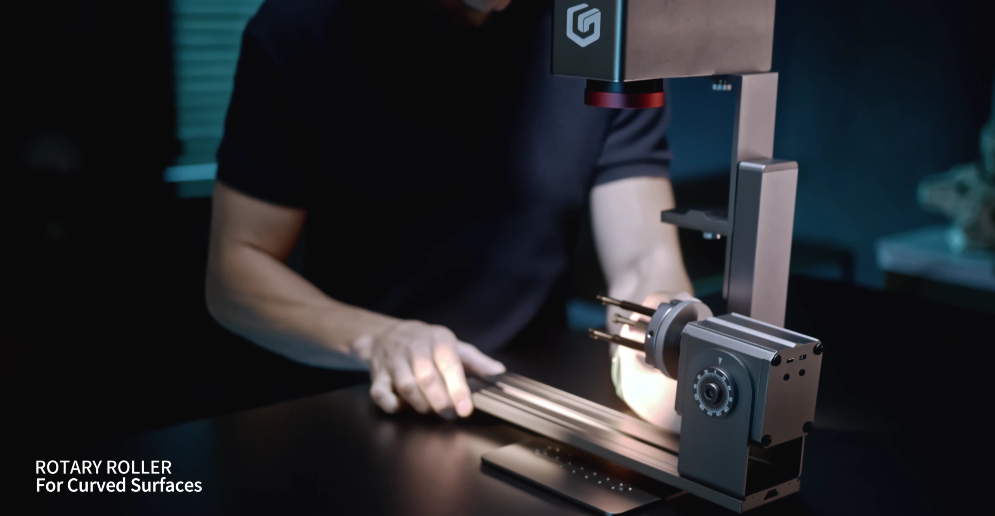
This guide provides essential steps for avoiding vibrations when using chucks on the Longer Nano. When engraving curved surfaces, chucks are used to secure cylindrical objects for rotational engraving. If the chuck is not properly adjusted, vibrations may occur during engraving, which can distort the design.
By Laser Engraver Blogs | October 29, 2024
LONGER Research: LONGER Nano Pro 12W Field Lens Function Introduction
The Nano Pro 12W laser engraver's field lens is designed with this focal length-to-wavelength relationship in mind, optimizing lens curvature and lens combinations to achieve a minimized spot size. This design not only enhances engraving detail but also enabling users to complete intricate engraving tasks in less time.
By Laser Engraver Blogs | October 28, 2024
LONGER Research: Introduction to Galvo Technology in LONGER Laser Systems
In LONGER's Nano series laser engraving machines, particularly the LONGER Nano Pro 12W, the structure of the galvo scanning marking head is composed of XY scanning mirrors, field lenses, galvos, and computer-controlled marking software.
By Laser Engraver Blogs | October 28, 2024
LONGER Research: Enhancing Personal Electronics with the Laser B1 20W Engraver

Laser engraving technology has revolutionized the personalization of personal electronics, moving beyond industrial applications to become an accessible tool for individual use. LONGER has been at the forefront of this transition, developing compact and efficient laser engravers that allow users to customize their electronic devices with unique designs.

Introduction

The Laser B1 20W engraver is an excellent example of this advancement, offering a powerful 20W diode laser with a wavelength of 450nm. Its working area of 450x440mm (17.72x17.32 inches) provides ample space for engraving various devices, while the fixed focus length of 50mm and a precise laser spot size of 0.08x0.15mm ensure detailed and accurate engravings. This makes it ideal for customizing a wide range of materials, including wood, acrylic, and metals commonly used in electronics.

One of the standout features of the Laser B1 20W is its ability to work at a fast speed of 36,000 mm/min, powered by a rated power of 105W. This high-speed capability is particularly beneficial for businesses and hobbyists who need to produce intricate designs quickly and efficiently. Moreover, the engraver's compatibility with popular design software like LaserGRBL and LightBurn, as well as various image formats (JPG, PNG, BMP, GIF, SVG, AI, etc.), allows for seamless integration into existing workflows.

Owning a laser engraver like the Laser B1 20W offers significant advantages over traditional customization methods. For instance, it allows for the creation of highly personalized items, which can make electronic devices not only unique but also serve practical purposes, such as labeling for security or organization. The engraver can cut up to 25mm of pine wood and 35mm of acrylic, and even 0.05mm of stainless steel, making it versatile enough to handle a variety of projects.

Here are some applications of laser engraving in personal electronics:

Smartphone and Tablet Customization:

LONGER Research: Innovations in Ray5 20W Laser Engraving for Ceramic Art

Users can engrave distinctive patterns, logos, or personal designs on the back covers of smartphones and tablets, providing a unique look and feel that stands out.

Laptop and Notebook Personalization:

Engraving laptops and notebooks with custom artwork, monograms, or business logos not only enhances the aesthetic appeal but also adds a layer of security by making the devices easily identifiable.

LONGER Research: Innovations in Ray5 20W Laser Engraving for Ceramic Art

Wireless Earbuds and Headphones:

Laser engraving initials, designs, or text on the surfaces of wireless earbuds and headphones can create fashionable and personalized accessories.

USB Drives and Power Banks:

These everyday gadgets can be transformed into stylish accessories with engraved logos, messages, or images, making them perfect for gifts or promotional items.

LONGER Research: Innovations in Ray5 20W Laser Engraving for Ceramic Art

Smartwatch Customization:

Smartwatches, with their intricate designs and limited space, are ideal for laser engraving. Users can add personal numbers, favorite drawings, or other designs to the watch face or casing.

LONGER Research: Innovations in Ray5 20W Laser Engraving for Ceramic Art

Game Console Personalization:

Gamers can engrave their consoles, controllers, and accessories with unique tags or designs, adding a personal touch to their gaming experience.

 LONGER Research: Innovations in Ray5 20W Laser Engraving for Ceramic Art

Laser-Etched Circuit Boards:

Although not as common, laser engraving can also be used by DIY enthusiasts and small-scale producers to create printed circuit boards (PCBs), offering a more precise and faster alternative to traditional chemical etching processes.

The Laser B1 20W engraver thus opens up numerous possibilities for personalization and customization in the realm of personal electronics. By enabling the creation of unique designs, it not only enhances the aesthetic appeal of devices but also adds practical benefits, such as easy identification and branding. As laser engraving technology continues to develop, we can expect even more innovative applications in the consumer electronics sector.


By Laser Engraver Blogs | October 25, 2024
Type-C cables for Longer Nano

The Longer Nano Series, including the Nano Pro 12W and Nano 6W, is a compact yet powerful laser engraving solution designed for portability and versatility. Its streamlined connectivity system relies on USB Type-C interfaces, enabling stable power delivery and reliable data communication in a simple plug-and-play setup.

However, not all USB Type-C cables are created equal. Differences in power handling, data speed, and internal construction can significantly affect device performance and safety. Therefore, when replacing a cable for your Longer Nano device, it is essential to select one that fully meets the required specifications.

Understanding USB Type-C Cable Differences

USB Type-C has become a universal standard for modern electronics, covering charging, data transfer, and power delivery across devices such as smartphones, laptops, and professional equipment. Despite its standardized connector, cable capabilities vary widely.

1. Power Delivery Capacity

One of the most critical factors in Type-C cables is their voltage and current rating:

  • Low-power cables: typically support 5V at low current, suitable for small accessories like earbuds
  • High-power cables: support up to 5A current and higher voltages up to 20V
  • Fast-charging cables: designed for USB Power Delivery (PD) standards, enabling significantly higher power output

USB PD technology can deliver up to 240W of power, allowing efficient charging and operation of high-demand devices such as laptops and professional tools. The system dynamically negotiates power levels between the device and power source, adjusting voltage (commonly 5V, 9V, 15V, and 20V) to match real-time requirements.

2. Data Transfer Capabilities

Not all USB-C cables support high-speed data transmission.

  • Some cables are charge-only, with no data transfer capability
  • High-performance cables compliant with USB 3.1 Gen 2 can achieve speeds up to 10Gbps

For applications involving firmware updates, file transfer, or device communication, high-speed data support is essential to ensure stable performance and efficiency.

3. Build Quality and Electrical Stability

Cable construction directly impacts safety and performance. High-quality USB-C cables typically feature:

  • Thicker conductors for improved current handling
  • Reduced electrical resistance for better efficiency
  • Reinforced shielding to minimize interference
  • Durable connectors for long-term reliability

Thicker and better-engineered cables help prevent overheating under sustained high-power operation, which is particularly important for devices requiring stable energy input.

4. Certification and Smart Cable Features

When selecting a replacement cable for the Longer Nano Series, it is strongly recommended to choose cables that are:

  • Certified for USB Power Delivery (PD)
  • Compliant with USB 3.1 or higher data standards
  • Manufactured by reliable, certified brands

Some advanced cables also include built-in power displays, allowing users to monitor real-time wattage output. This can be a useful indicator of charging stability and compatibility with high-performance devices.

Recommended Cable Selection for Longer Nano

To ensure optimal performance and safety, users should choose USB Type-C cables that meet the following criteria:

  • Support USB Power Delivery (PD) fast charging
  • Comply with USB 3.1 Gen 2 or higher standards
  • Capable of stable high-current transmission (up to 5A)
  • Built with high-quality materials and reinforced connectors
  • From certified and reputable manufacturers

Using the correct cable ensures consistent power delivery, stable data communication, and reliable engraving performance for the Longer Nano Series.

Conclusion

While USB Type-C has become a universal standard, its performance varies significantly depending on cable design and certification. For the Longer Nano Pro 12W and Nano 6W, selecting a properly rated PD-compatible and high-speed data cable is essential for maintaining stability, safety, and optimal engraving performance.

Choosing the right cable is not just a matter of convenience—it directly impacts the reliability and efficiency of your entire workflow.


By Laser Engraver Blogs | October 19, 2024
Power vs Speed Test with LaserGRBL for Longer Ray5 & B1

The LONGER Ray5 and LONGER B1 laser engravers are capable of engraving and cutting a wide range of materials with high precision and efficiency. However, achieving optimal results requires careful adjustment of processing parameters—particularly laser power and engraving speed, as different materials respond uniquely to laser energy.

Understanding Material Response to Laser Settings

Materials react differently when exposed to laser energy. For metals in particular, variations in power output and movement speed can significantly affect the engraving outcome.

By fine-tuning these parameters, users can achieve different surface oxidation levels and heat effects, which can produce subtle color variations on metal surfaces. This controlled thermal interaction is the foundation of multicolor laser engraving on metal, a technique widely used in decorative and industrial applications.

Both the LONGER Ray5 (5W) and LONGER B1 are capable of metal engraving. However, the B1 offers superior stability and higher power capability, making it more suitable for advanced applications such as multicolor metal engraving.

Using LaserGRBL for Parameter Optimization

To achieve precise and repeatable results, LaserGRBL provides a built-in tool called Power vs Speed Test, which allows users to quickly identify optimal engraving parameters for specific materials.

Step 1: Access the Power vs Speed Test Tool

From the LaserGRBL main interface:

Select:

Generate → Power vs Speed Test

This will open the parameter configuration window.

Step 2: Configure Power Settings

LaserGRBL uses a scaled power system:

  • S-10 = 1% power
  • S-1000 = 100% power

For testing purposes, it is recommended to define a power range such as:

  • Minimum: 100
  • Maximum: 1000
  • Step size: 10

This allows fine-grained control over laser output for accurate material testing.

Step 3: Configure Speed Settings

Next, define engraving speed based on material type:

  • Wood: approximately 3000–9000 mm/min
  • Metal & steel: approximately 100–1500 mm/min

A recommended configuration is to use 7 steps for balanced testing coverage.

Step 4: Set Line Density (Quality)

The engraving resolution can be adjusted using line density settings:

  • Recommended range: 8000–12000 lines/mm

Higher values result in finer detail but longer processing time.

Step 5: Generate the Test File

After configuring parameters, click:

“Create!”

LaserGRBL will generate a test pattern combining multiple power and speed combinations for evaluation.

Step 6: Export and Run the Test

To proceed:

  1. Select File → Save (Advanced Option)
  2. Export the generated file as G-code
  3. Transfer it to a microSD card or device storage
  4. Run the test on the LONGER Ray5 or B1

Alternatively, the test can also be executed directly via USB connection using the Cutting Test mode, if preferred.

Step 7: Analyze Results and Optimize Settings

After completion, carefully inspect the engraved test pattern. The variations in tone, depth, and clarity will help determine the most suitable combination of power and speed for your specific material and desired effect.

This calibration process is essential for achieving consistent high-quality results, especially in advanced applications such as metal marking and multicolor engraving.

Conclusion

By leveraging the Power vs Speed Test in LaserGRBL, users of the LONGER Ray5 and B1 can efficiently identify optimal engraving parameters for different materials. While both machines are capable of metal engraving, the B1 provides enhanced performance and stability, making it the preferred choice for precision-driven and multicolor metal engraving applications.


By Laser Engraver Blogs | October 18, 2024
LONGER Research: Engrave everywhere with Longer Nano

Longer Nano is an innovative and powerful laser engraver, capable of engraving various types of materials quickly and anywhere. The strength of Longer Nano, based on its portability and ability to make engravings anywhere, is ensured by the Longer Laserburn smartphone App; This app is able to process various types of images, both graphic and vector, and depending on the type of image chosen it is possible to choose different engraving methods.

Engraving of graphic images
Graphic images are those in jpg, png, etc format, and are the most common type of images.
Within Longer Laserburn you just need to select the Creation menu, then just upload a graphic image from your smartphone's gallery.


After importing the graphic image you can choose various types of effects, change the size, as well as change the brightness and contrast of the photo. Keep in mind that graphic images are greatly affected by resizing, as they are composed of pixels, and excessive magnification can result in a loss of resolution.

Finally, in the Layers menu, you can set the engraving parameters. As far as graphic images are concerned, the ideal Processing Method is Engrave, which results in a series of lines engraved one after the other, until the image is completely realized. The number of lines per mm can be set via "Accuracy" according to your preference, keeping in mind that more lines to be engraved takes longer.

Engraving vector images
Vector images are those in svg format, and are a less common type of image than graphic ones, however they are widely used to make logos and are usually presented in black and white.
Within Longer Laserburn you just need to select the Creation menu, then just upload a vector image from your smartphone's gallery. An excellent website to retrieve vector images can be https://www.freepik.com/.

After importing the vector image, you can only change the size, as vector images do not have any editable graphic properties. On the other hand, vector images are not affected by scaling, so they can be scaled infinitely without ever losing in terms of definition.

Finally, in the Layers menu, you can set the engraving parameters. For vector images, you can choose whether to keep only the perimeter of the image or to insert a fill as well, so as to obtain various types of engraving effects.
In addition, it is also possible to choose between two different Processing Method methods, namely Engrave or Cut; as mentioned, Engrave results in a series of lines engraved one after the other, until the image is completely realized, while Cut follows exactly the perimeter of the image. Therefore, it can be deduced that Cut is better suited to engrave vector images without fill, composed only of the perimeter, while Engrave is more suitable for engraving vector images for which it has been decided to add a fill as shown above.


By Laser Engraver Blogs | October 14, 2024
LONGER Research: Introduction to Color Engraving on Stainless Steel with Nano Pro 12W

The technology behind color laser engraving varies by material but primarily relies on two core methods: first, the natural generation of color through oxidation reactions; second, the use of coloring agents to achieve the desired color effects. This research is about how to use Longer Nano Pro 12W to engraving color laser.

Principle of Laser Color Engraving
For color laser engraving on stainless steel, the techniques are mainly divided into two categories: the first involves the laser beam instantaneously heating the metal surface, triggering physical or chemical reactions that alter the surface color. The second involves the formation of colored oxides on the metal surface or the generation of a transparent, colorless oxide layer, which displays various colors through thin-film interference effects. By precisely adjusting key parameters such as laser power, engraving speed, spacing, and the number of passes, users can effectively control the reaction depth on the metal surface, achieving a variety of color effects to meet different processing needs.

Engraving Parameters for Color Engraving on Stainless Steel
How to Use Nano Pro to Test Parameters for Different Colors on Stainless Steel? This color engraving parameter guide is based on the LONGER Nano Pro model, using stainless steel as the metal material.

Engraving Parameters for Color engraving on Stainless Steel

With the "Material Test" function in LightBurn software, the preparation process for engraving parameter test files is significantly simplified. Users can enter relevant parameter ranges in the "Material Test Generator" to automatically generate test files. Key parameters include Power, Speed, Interval, and Passes; these combinations directly affect the resulting colors after engraving. By setting appropriate parameter ranges based on the specific dimensions of the material, users can generate the corresponding engraving test files.

The operation process is illustrated as follows: first, launch the LightBurn software, import the configuration file, select the correct COM port, and load the Nano Pro machine configuration. When the console displays "Nano Pro connected successfully," click "Laser Tools" in the toolbar to continue.

Lightburn dashboard
Lightburn dashboard

In the second step, as shown in the image, after clicking "Laser Tools" in the toolbar, select the "Material Test" function. The system will pop up the matrix parameter settings interface. Here, users can set the required matrix parameters for testing. For the Nano Pro model, the recommended parameter range is Power 50% to 100%, Speed 1000 mm/min to 3000 mm/min, using an 11x11 matrix layout. Ensure all parameters are set correctly, then click "Start" to initiate the engraving test.

After the engraving test is complete, the system will generate a colorful matrix (as shown in the image). Users can select their desired color from the matrix and find the corresponding laser power and speed. The horizontal axis of the matrix represents the power parameters, while the vertical axis represents the speed parameters, allowing users to easily determine the required engraving settings by matching coordinate positions.


How to Create Colorful Engravings
Open LightBurn software, click File -> Import to import the layered image file into LightBurn, and then connect to the Nano Pro machine.

How to Create Colorful Engravings

How to Create Colorful Engravings
As illustrated, we import the image and perform layer separation on the vector image:
1. First, select the part of the vector image to be engraved.
2. Click in the lower right corner to set Layer 1.

How to Create Colorful Engravings 1

How to Create Colorful Engravings 1
3. As shown in the image, we set the butterfly part as a layer.
4. Next, set Layer 2.

How to Create Colorful Engravings 2

How to Create Colorful Engravings 2
5. As shown in the image, select the central part of the butterfly.
6. Then, set Layer 3.

How to Create Colorful Engravings 3

How to Create Colorful Engravings 3
Finally, we obtain the complete layered vector of the butterfly, as shown in the image. We then match the corresponding parameters for the desired colors. Once completed, engraving will yield the desired colorful image.

How to Create Colorful Engravings 4

How to Create Colorful Engravings 4
We end up with a blue butterfly.


Precautions for Nano Pro Color Engraving on Stainless Steel
Minimum Power
It is crucial to note that when engraving stainless steel, the power must be maintained at over 50%. Power below 50% may result in colors that are too faint, with the engraving primarily yielding a single yellow color. The engraving effect is closely related to laser power, making precise adjustment essential for achieving the ideal color.

Minimum Thickness and Surface Finish of Stainless Steel
During the engraving process, overly thin stainless steel plates may deform due to heat accumulation. It is recommended to choose stainless steel plates with a thickness of at least 2 mm. Additionally, for surface treatment, it is advisable to use matte or brushed stainless steel for better engraving results. Industrial-grade stainless steel plates or mirror-finished stainless steel are not recommended, as these materials may not perform optimally in laser engraving.

Ensure Engraving is Level
When using the recommended engraving parameters, ensure the laser is accurately focused and that the Nano Pro device is placed level. If the focus height is incorrect, it will directly impact the uniformity and accuracy of the engraving colors. Therefore, it is essential to calibrate the focus height before each operation to ensure the best engraving results.

By Laser Engraver Blogs | October 12, 2024
From Desktop to Handle: LONGER Laser Nano

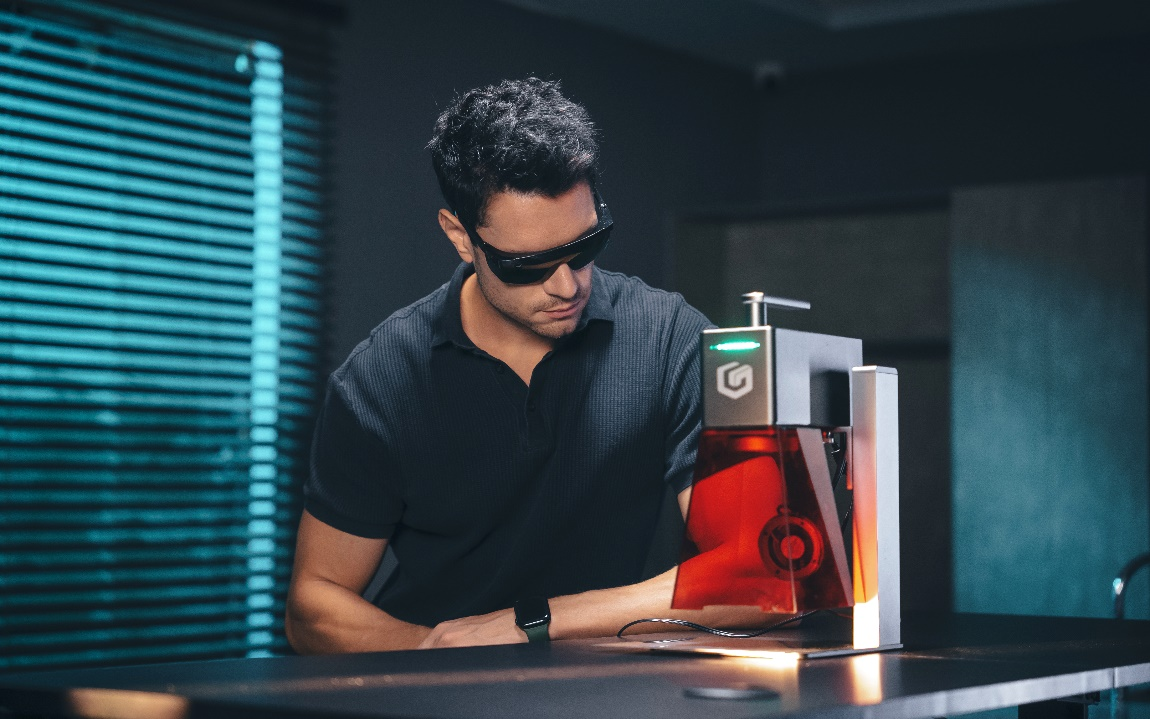
LONGER's portable laser engraving machines, exemplified by the Longer Nano, provide users with unmatched convenience, versatility, and efficiency, making them indispensable tools for a wide range of applications and industries.

Introduction

LONGER, a well-established brand known for its diverse range of desktop engraving machines, has expanded its portfolio to include portable laser engraving machines. These portable devices offer a multitude of advantages over their desktop counterparts, making them increasingly popular among users. Here are some key benefits of LONGER portable laser engraver-Longer Nano.
Alt image
Portability
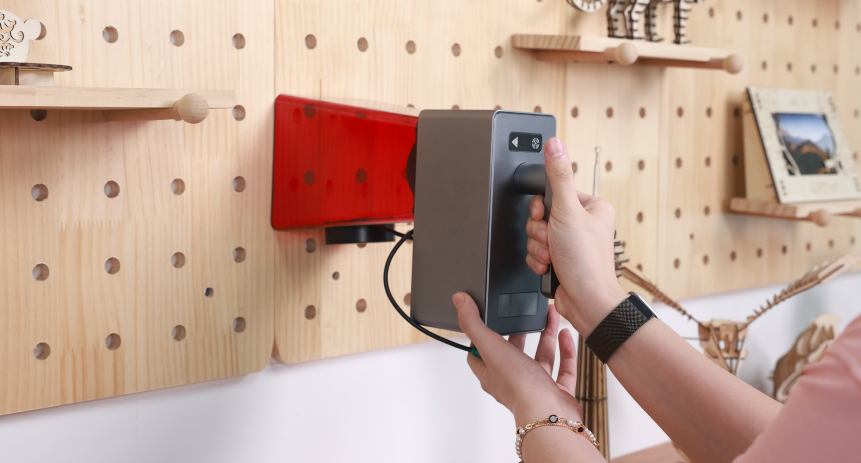
Longer Laser Nano's portable laser engravers are designed with lightweight and compact features, enhancing their portability compared to traditional desktop models. Unlike fixed desktop engravers, these handheld devices can be easily transported from one location to another, making them ideal for on-site engraving tasks and situations where mobility is essential.
Alt image
Flexibility
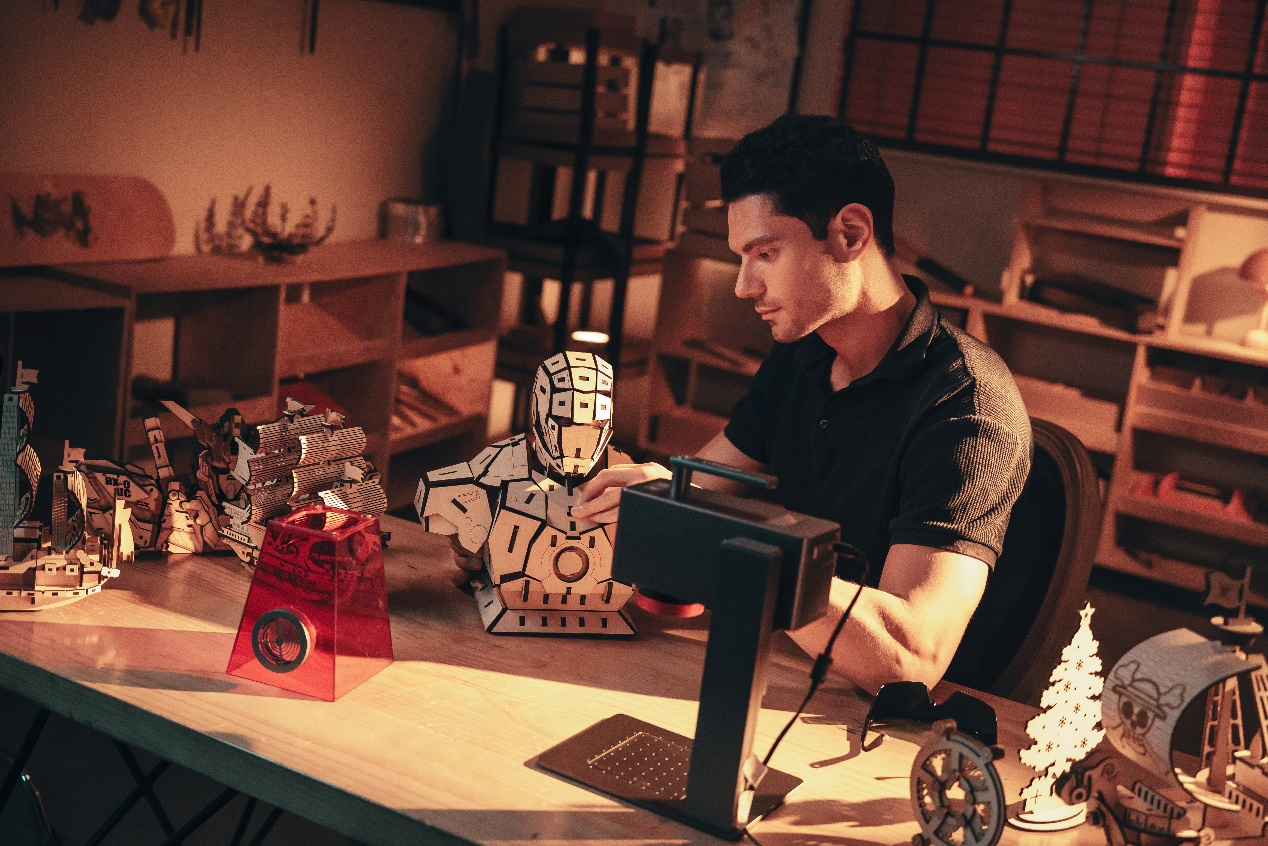
Portable engravers offer greater versatility in terms of engraving on objects of varying sizes and shapes. Longer Laser Nano can be use with Rotary Extension, allowing users to create larger engravings such as signs, plaques, and even furniture. The expanded engraving area enables users to work on multiple small items simultaneously, increasing efficiency and productivity. Longer Nano is capable of engraving on a wide range of materials, including wood, plastic, metal, leather, and glass. This versatility enables users to create intricate designs, logos, text, and images with precise detail reproduction, catering to diverse creative needs and applications.
Alt image
Ease of Use
Longer Laser Nano portable engravers are designed with user-friendly interfaces and intuitive navigation, making them accessible to users of all skill levels. Whether you're a beginner or an experienced technician, operating a Longer portable engraver is straightforward and hassle-free. Longer also provides comprehensive instructional materials, including handbooks and videos, to assist users in setting up and operating their engravers effectively.

Alt image
Time-saving
Longer portable engravers with larger engraving areas contribute to significant time savings by allowing users to complete engraving tasks more efficiently. The expanded workspace enables users to engrave larger pieces or perform multiple passes with fewer iterations, increasing overall productivity and reducing manufacturing time. This capability is particularly beneficial for businesses requiring fast turnaround times and efficient service delivery.

Alt image
Conclusion

Despite their numerous benefits, it's essential to acknowledge the limitations of home laser engraving machines compared to industrial-grade equipment. However, for hobbyists, artists, and small businesses, LONGER laser engraving machines offer a cost-effective solution for exploring creative opportunities, provide home users with quality, affordability, precision, and ease of use, making them ideal for a wide range of engraving and cutting projects. With their versatility and user-friendly features, these machines open up a world of creative possibilities for enthusiasts and professionals alike.

By Laser Engraver Blogs | October 11, 2024
LONGER Nano: Revolutionizing Curved Surface Engraving with Distortion-Free Precision

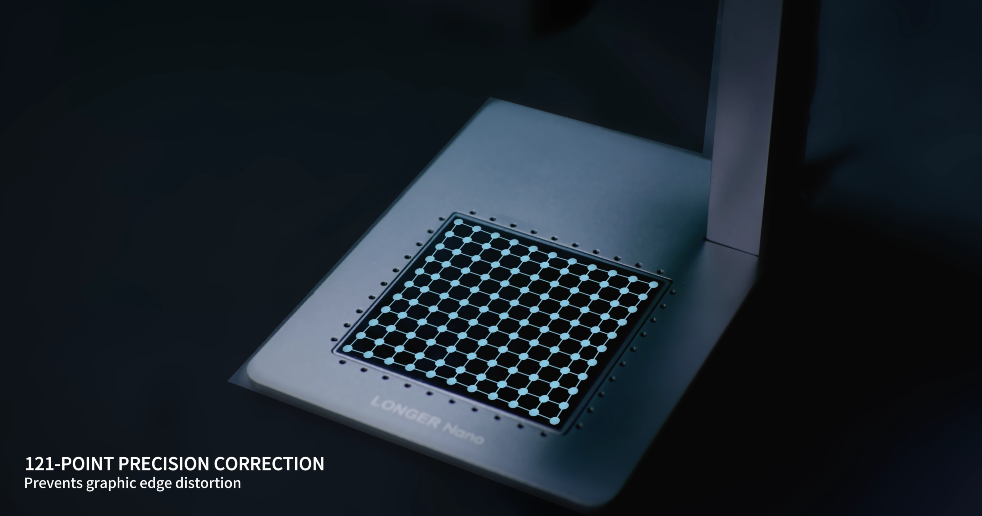
LONGER’s Nano Pro 12W is not just another laser engraver – it’s a groundbreaking tool equipped with advanced technology that takes precision to new heights. Designed for professionals and hobbyists alike, the Nano Pro 12W is capable of curved surface engraving and ensures distortion-free results thanks to an algorithm developed exclusively by LONGER. Whether you're engraving cups, bottles, or any other uneven surfaces, the Nano Pro handles the job with ease and perfection.


Nano Pro’s standout feature is its ability to engrave on curved surfaces without distortion. The exclusive LONGER-developed algorithm makes this possible by adjusting the laser in real-time to follow the curvature of the material, delivering clean, sharp engravings even at the edges where distortion is often a problem with traditional machines. Whether you're working with cylindrical objects like cups or mugs, Nano Pro ensures every detail is captured with stunning clarity.

Nano seires has the only engraver equipped with LONGER's proprietary algorithm, which intelligently adjusts for surface irregularities to maintain flawless accuracy across curved and uneven surfaces. Nano excels at engraving not only flat materials like wood, leather, and metal, but also a wide range of curved surfaces, expanding the possibilities for creative projects. The distortion-free edge engraving is perfect for intricate designs that extend to the outermost areas of the material, ensuring uniformity and precision from center to edge.


Weighing just 1.2kg, the Longer Nano is perfect for creators on the move. Its lightweight design allows for both portability and handheld engraving. Available in 12W and 6W power options, Nano Series cuts through wood up to 10mm thick, making it one of the most powerful compact laser engravers in its class. Along with its exceptional precision 0.01*0.01, the Nano Pro 12W sets new standards for speed, operating at an impressive 5000mm/s. As the fastest portable laser engraver on the market, it allows users to finish projects in significantly less time compared to other devices. This remarkable speed, combined with its precision, positions the Nano Pro 12W as a breakthrough for those seeking efficiency without sacrificing quality.

The Longer Nano series delivers exceptional user-friendliness, suitable for both beginners and experts. Notably, it’s the first portable laser engraver with seamless support for LightBurn and LaserGRBL, a feature officially recognized by Diego, LaserGRBL’s developer. With the LaserBurn app, created by LONGER, users can manage the Nano effortlessly from their devices, making the engraving process more efficient and enabling endless creative possibilities.

LONGER Nano Pro stands out from the competition by offering professional-grade features in a compact, affordable package. Its ability to engrave curved surfaces without distortion opens up new creative possibilities for personal and commercial use. Whether you’re engraving on flat materials or crafting on rounded surfaces, the Nano Pro is designed to handle it all with precision and ease.

With the Nano Pro, LONGER continues to push the boundaries of what’s possible in laser engraving, making it the ideal tool for anyone looking to add detailed, professional-quality engravings to their projects.

By Laser Engraver Blogs | September 26, 2024