Lasergravierer-Blog

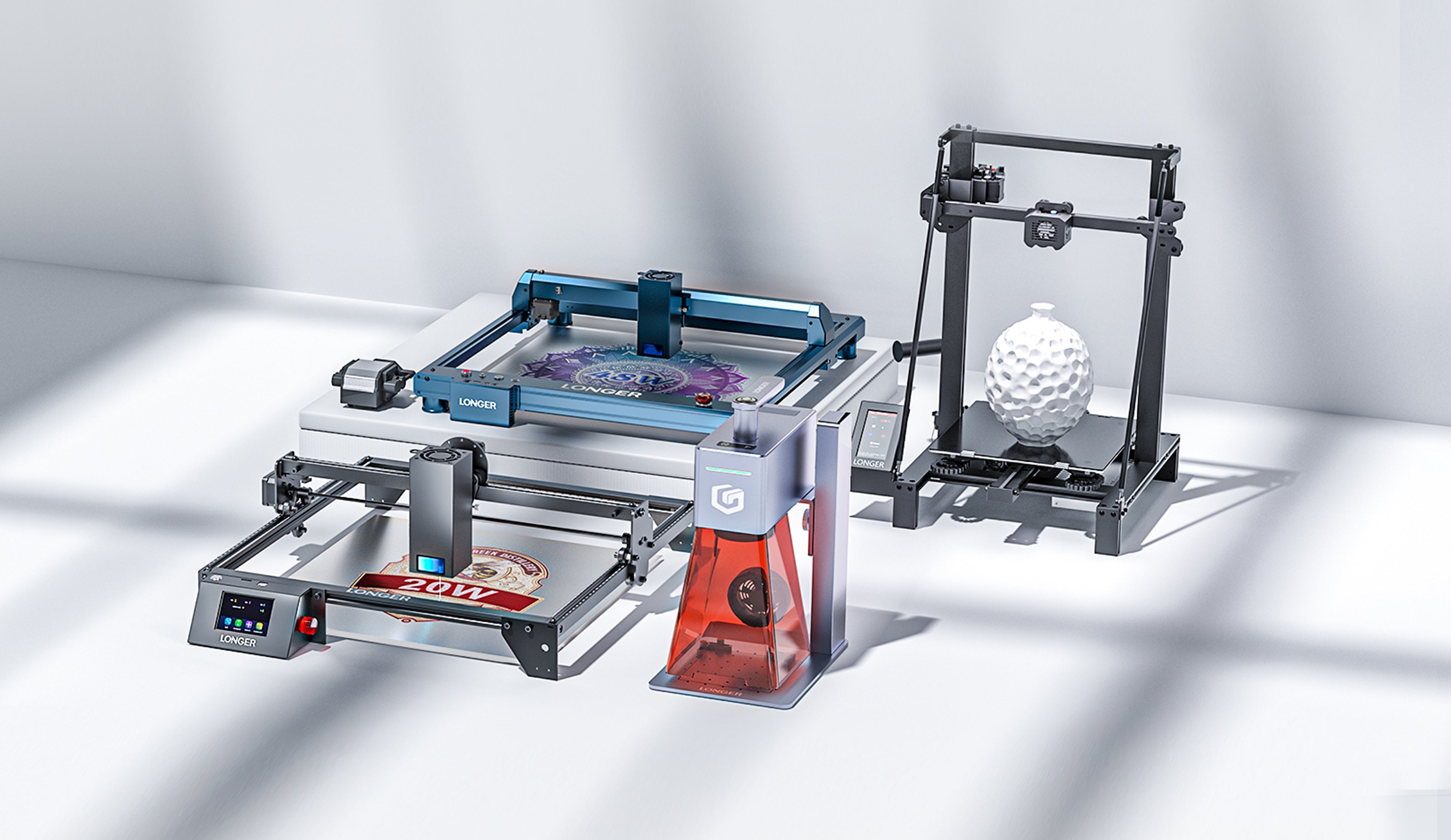
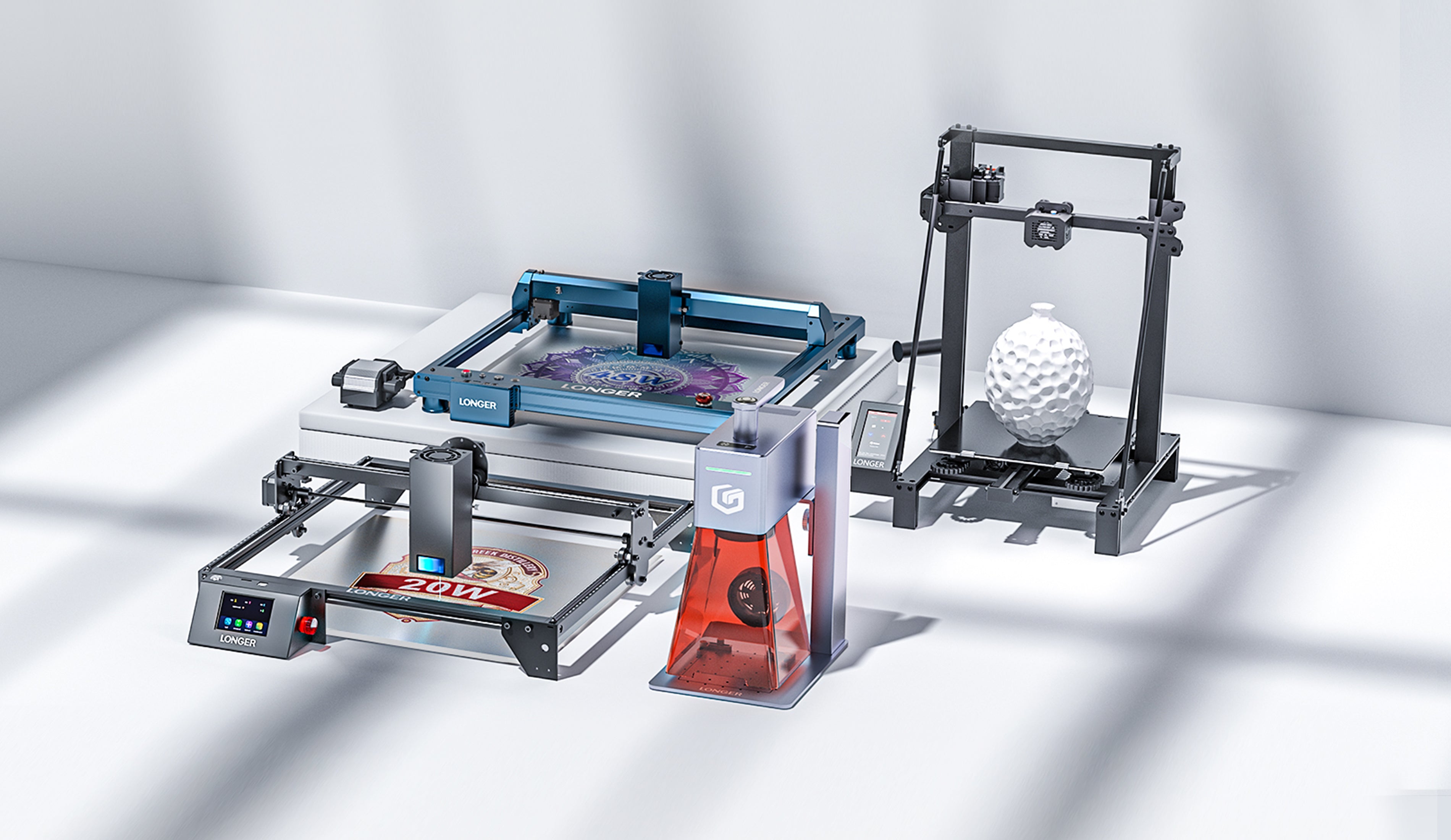
LONGER Research: Portable Laser Engravers vs. Traditional Desktop Models

In today's era of rapid technological development, laser technology has become an important part of many fields. In laser technology, red laser and blue laser have always been the focus of attention. The contrast between them is not only the difference in color, but also the unique characteristics and advantages displayed in different application fields. Let us explore the comparison between red laser and blue laser and explore their different charms in the world of technology.


Wavelength


When we take a closer look at red lasers and blue lasers, their wavelength differences are not just differences in color, but also reflect differences in the energy and properties of light. The wavelength of red laser light is at the longer end of the visible spectrum, typically between 800 and 1064 nanometers, which gives it its bright red color. In contrast, blue laser has a shorter wavelength, approximately between 445 and 500 nanometers, which causes it to appear a deeper blue color. This difference in wavelength determines their position in the spectrum and corresponding energy levels. Blue laser has a higher energy density due to its shorter wavelength, which makes it uniquely advantageous in certain applications


Manufacture


In addition to differences in wavelength and application fields, red lasers and blue lasers also differ in the manufacturing and cost of laser devices. Because blue lasers require more complex manufacturing processes and higher quality materials, blue laser devices are generally more expensive to manufacture than red laser devices. This has also resulted in red lasers being more common in some consumer electronics products, such as laser pointers or laser pointers. Red lasers typically use helium-neon gas, dyes, or specific semiconductor materials that produce light with wavelengths between 800 and 1064 nanometers. In contrast, the main laser material of blue laser is gallium nitride (GaN) semiconductor, which can produce light with wavelengths between 445 and 515 nanometers. There are obvious differences in the laser structure between the generation processes of red laser and blue laser. The laser structure of a red laser can be a gas laser, a dye laser, a semiconductor laser or a solid laser, depending on the laser material used. Helium-neon gas laser is one of the earliest red lasers developed, and semiconductor laser is one of the common types of red lasers. In contrast, blue lasers usually adopt a semiconductor laser structure, mainly using semiconductor materials such as gallium nitride (GaN). These different laser structures have an important impact on the performance and application of lasers, such as power output, wavelength stability, and complexity of the preparation process. There are significant differences in the excitation methods of red laser and blue laser generation processes. Red laser can be excited in various ways, including electric shock, beam incidence or chemical reaction. Specifically, helium-neon gas lasers can be excited by electric shock to generate laser light, while dye lasers can be realized by laser beam incidence or chemical reactions. In contrast, blue lasers are typically achieved by electrically or optically injecting semiconductor materials such as gallium nitride. These different excitation methods determine the energy efficiency, stability and complexity of the preparation process of the laser, thereby affecting the performance of red lasers and blue lasers in their respective application fields.


Application


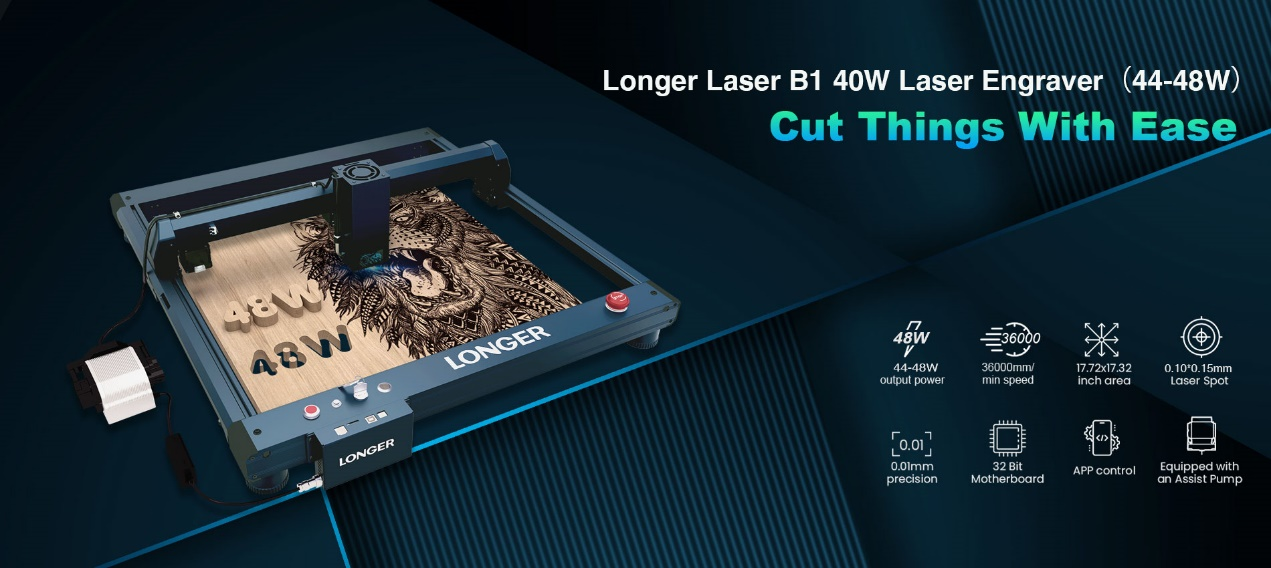
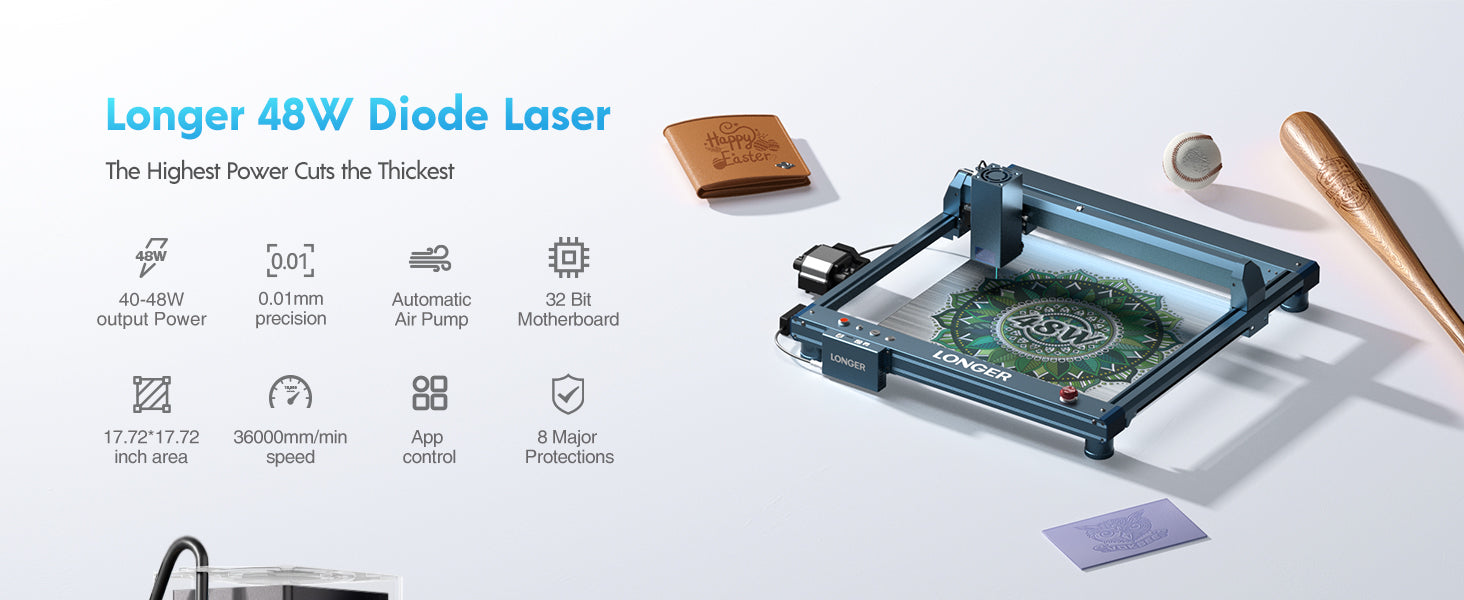
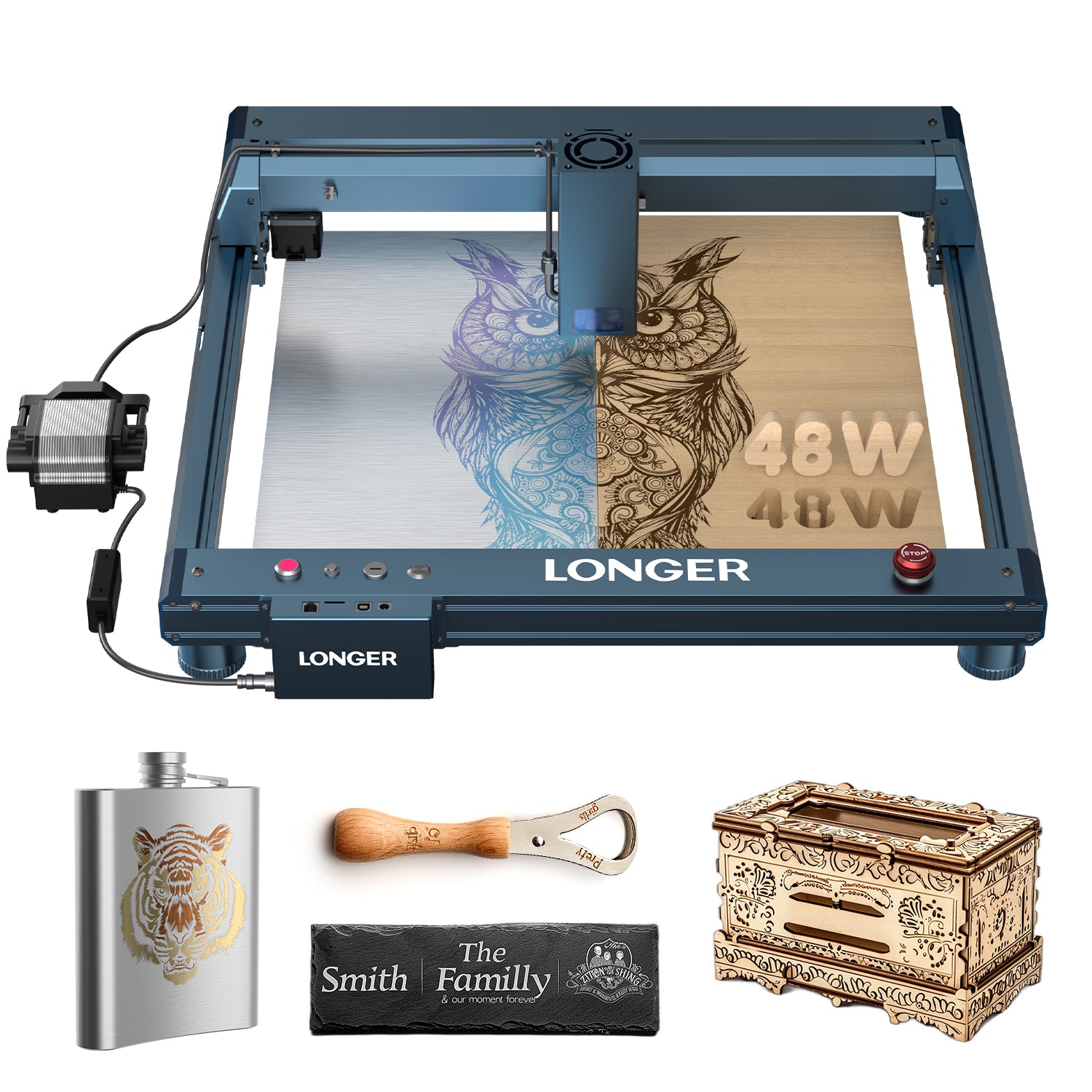
In terms of optical storage, blue lasers are widely used in high-definition optical discs and Blu-ray discs because of their shorter wavelength and higher data density. In contrast, red lasers work in traditional DVDs and CDs. In the medical field, due to the higher energy of blue laser, it has wider applications in laser surgery and laser therapy, enabling more precise treatment effects. Infrared lasers typically operate at longer wavelengths, typically in the 800 to 1064 nanometer range. These longer wavelengths are suitable for engraving or marking materials that effectively absorb infrared light. LONGER Ruby pulsed infrared laser adopts the most advanced technology and an ultra-fine laser spot size of 0.03*0.03mm. Longer Ruby can achieve complex details accurate to millimeters, and perform perfect engraving on metal, plastic and other objects. Blue lasers operate at shorter wavelengths, typically in the 400 to 500 nanometer range. These shorter wavelengths provide higher energy density and are suitable for engraving materials that absorb blue light efficiently. Laser B1 is equipped with an 8-core diode 44-48W power laser, which increases the laser engraving machine's cutting capacity by 20%. The highly concentrated laser beam increases the cutting capacity by more than 20%, and can cut 40mm basswood and 50mm acrylic multiple times. 17.72 x 17.32 inches (450 x 440mm) engraving area, ideal for A3 panels. The engraving speed is as high as 36,000mm/min, equipped with a 32-bit chipset and intelligent air assist system with automatic lighting control, 8 major safety protections, and a solid frame. Designed for advanced users who are proficient in laser engraving and cutting technology, the Laser B1 has superior cutting capabilities and can easily cut through a variety of materials. Whether you're working with wood, acrylic, or metal, the Laser B1 delivers powerful cutting performance for complex projects and ensures efficient, precise results every time. 


Conclusion


In general, red laser and blue laser, as two important representatives of laser technology, each show their unique charm in different fields. Their comparison is not only the difference in color and wavelength, but also the comparison in application fields, cost and performance. With the continuous advancement and development of science and technology, we believe that red lasers and blue lasers will continue to play an important role in their respective fields, bringing more innovation and convenience to mankind. LONGER's laser engraving machines, including the LaserB1 and Ray5 series, come standard with blue laser heads. However, for customers who prefer red lasers, they have the option to purchase our LONGER Ruby laser head for replacement. With 8 years of professional research in laser engraving machines, LONGER is committed to providing customers with high-quality products that offer excellent value for money.

By Lasergravierer-Blog | April 12, 2024
Mastering Precision: Essential Tips for Laser Cutting Success

Proper calibration and setup are critical to achieving high-quality results in laser cutting and engraving. Whether you are working with wood, acrylic, fabric, or metal, following correct operating practices ensures accuracy, efficiency, and consistency.

1. Proper Calibration

Accurate calibration is the foundation of successful laser cutting.

This includes:

  • Fine-tuning the cutting bed level
  • Ensuring precise laser beam alignment
  • Verifying correct focal distance and positioning

Consistent calibration throughout operation helps maintain stable cutting accuracy and prevents quality issues.

With LONGER laser machines, precise calibration ensures smooth material processing and clean, professional-grade results. The fixed-focus system also helps maintain consistent cutting depth, reducing the need for frequent manual adjustments.

2. Material Selection Matters

Different materials respond differently to laser energy, making material selection a key factor in performance.

Important factors include:

  • Thickness
  • Density
  • Surface reflectivity

For example:

  • Delicate materials like paper or fabric require lower power settings to avoid burning or scorching
  • Dense materials such as wood or acrylic require higher power and slower speeds for clean cuts

LONGER laser machines provide flexible settings that allow users to adapt easily to different material types.

3. Always Perform Test Cuts

Before starting complex or final projects, test cuts are essential.

Test cutting helps you:

  • Adjust power and speed settings
  • Verify focus accuracy
  • Avoid material waste or damage

For instance:

  • When engraving fine details on metal with the RAY5 20W, test cuts help prevent discoloration or overheating
  • When cutting thick materials like basswood or acrylic with the Laser B1 series, trial runs ensure clean edges and consistent performance

4. Ensure Proper Ventilation

Laser cutting produces smoke, dust, and fumes that may be harmful if not properly managed.

Always:

  • Work in a well-ventilated environment
  • Use an exhaust system or air filtration setup

This protects both the operator’s health and machine performance.

5. Secure Material Placement

To ensure accuracy during operation, materials must be firmly fixed in place.

Recommended methods include:

  • Clamps
  • Double-sided adhesive
  • Custom fixtures

Proper fixation prevents movement, vibration, or misalignment during cutting.

6. Optimize Cutting Parameters

Fine-tuning settings is essential for achieving optimal results.

Adjust:

  • Power
  • Speed
  • Frequency

Balancing these parameters helps reduce:

  • Burning
  • Melting
  • Edge charring

Experimentation is key to finding the best combination for each material.

7. Maintain the Laser Lens

Regular lens maintenance is critical for consistent performance.

Dust or residue buildup can:

  • Reduce cutting accuracy
  • Weaken laser power
  • Affect beam quality

Always clean the lens using manufacturer-recommended methods and replace it when necessary.

8. Use Assistive Technologies

Modern laser systems may include:

  • Camera alignment systems
  • Real-time monitoring tools
  • Smart positioning software

These features improve precision and efficiency, especially for complex or detailed designs.

Conclusion

By following proper calibration, material selection, testing, and maintenance practices, users can achieve highly precise and efficient laser cutting results.

With LONGER laser engraving machines—developed through years of innovation in laser technology—you are equipped with reliable tools designed to enhance creativity, accuracy, and productivity across a wide range of materials and applications.

By Lasergravierer-Blog | April 11, 2024
The Power of Precision: Understanding the Differences Between Red and Blue Laser Engraving Machines

Red and blue lasers are two prevalent choices in the engraving machine market, each equipped with distinct laser heads. These laser heads offer unique performance characteristics and applications. By comprehending the disparities between red and blue lasers, we can make informed decisions to enhance production efficiency and quality. This article delves into the variances between red and blue laser engraving machines, using the LONGER RAY5 20W laser engraving machine and the LONGER Ruby Pulsed Infrared Laser Module as a case study.

Features of red laser engraving machine
Red light laser engraving machines usually use longer wavelength red light as the engraving light source, which has higher penetrating power and larger spot diameter. This makes it excellent at handling thicker materials such as wood, leather, and certain non-metallic materials. In addition, red light laser engraving machines also have high engraving speed and low cost, so they are popular in mass production and rapid prototyping.

Application of red laser engraving machine
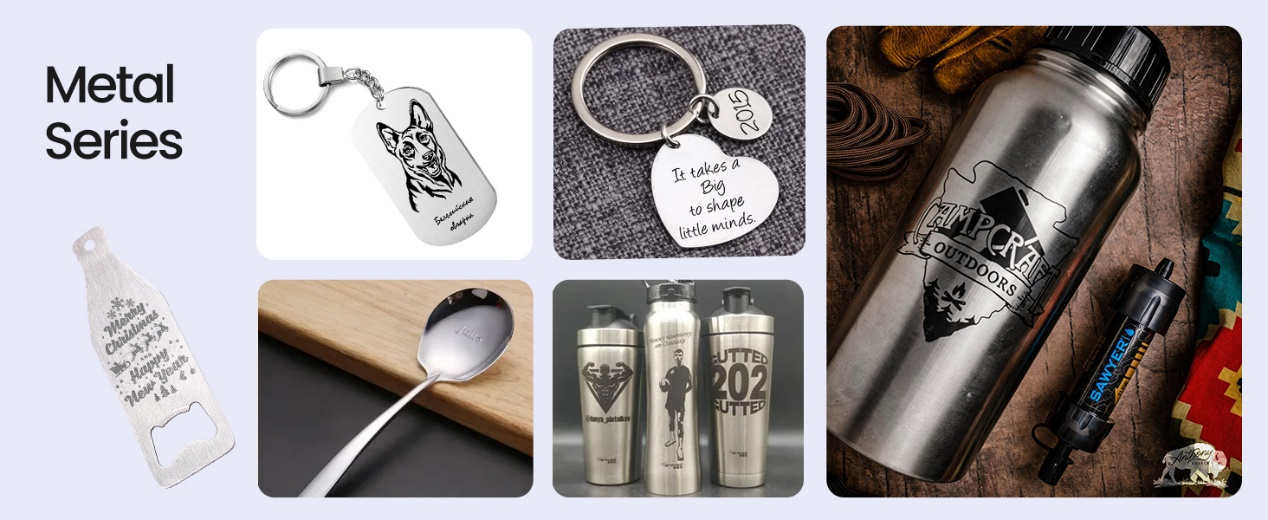
LONGER Ruby PulsedInfrared Laser Module is a red laser head developed by the LONGER team. It uses advanced technology and an ultra-fine laser spot size of 0.03*0.03mm, which can easily achieve complex details down to millimeters, and can be produced on metals, plastics, etc. Perfect carving. LONGER Ruby has unparalleled engraving capabilities from metals and alloys such as iron, copper, aluminum, magnesium, zinc, gold, silver and titanium to other materials such as metal oxides, plated surfaces, ABS, inks and epoxies. When the laser engraving comes to engraving on glass, the choice of LONGER Ruby Pulsed Infrared Laser Module ensures seamless engraving without any tinting, showcasing its remarkable efficiency and speed in completing tasks while maintaining the clarity and precision of the design. Particularly suitable for scenarios requiring processing of thick materials and large-scale production, for instance, in industries like engineering and leather product manufacturing, Ruby Pulsed Infrared Laser Module offer unmatched efficiency in completing engraving tasks, thereby significantly enhancing overall production efficiency.

Features of blue laser engraving machine
Blue light laser engraving machines use shorter wavelength blue light as the engraving light source, with higher resolution and smaller spot diameter. This makes it excellent at handling thin materials such as paper, plastic and metal films. Blue light laser engraving machines also have high engraving accuracy and low heat output, so they have advantages in fine engraving and high-precision cutting.Longer's LaserB1 series and Ray5 laser engraving machines represent prime examples of blue laser engraving technology, maintaining their blue laser functionality without the need for a laser head change.

Application of blue laser engraving machine
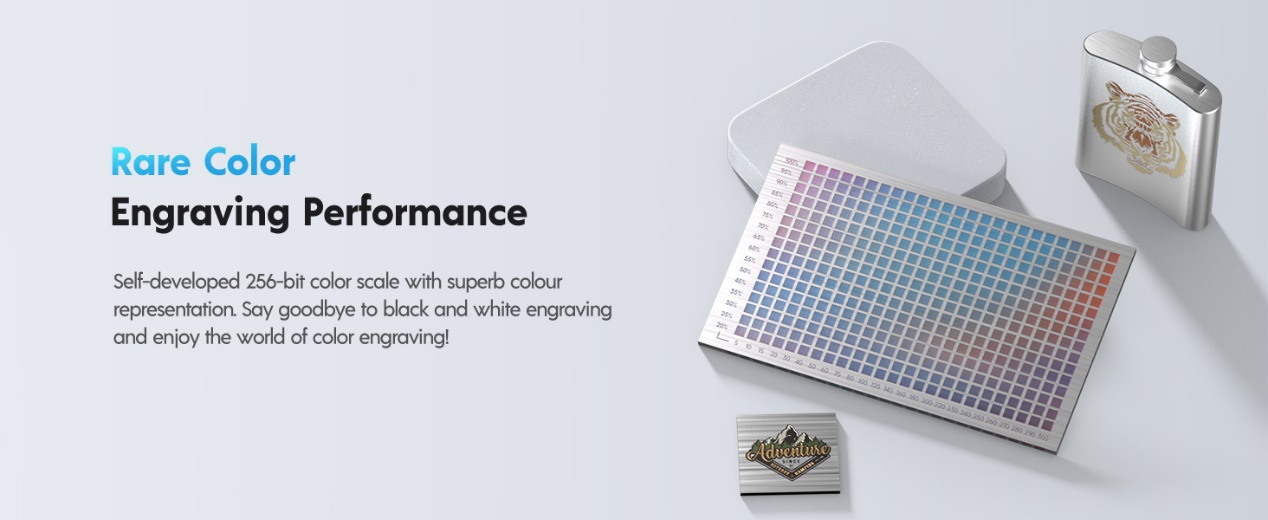
LONGER RAY5 20W  blue light laser engraving machine is a four-core diode laser with 22-24W output power and strong cutting ability. Its ultra-fine 0.08*0.1mm focus and 10000mm/min burning speed can effectively engrave on metal surfaces. Achieve multi-color engraving, and support multiple connection options, such as WIFI, APP, USB and TF card. For scenes that require fine engraving and high-precision cutting, blue-ray laser engraving machines have more advantages. They can easily achieve detailed engraving while avoiding material deformation due to high temperatures. For example, in the electronics industry, precision instrument manufacturing and other fields, blue-ray laser engraving machines can achieve high-precision engraving and cutting to meet product accuracy requirements. In addition, blue light laser engraving machines are also widely used in art production, anti-counterfeiting markings and other fields.

Conclusion

Red light and blue light laser engraving machines each have their own unique advantages and application scenarios. When choosing a laser engraving machine, creators should choose the appropriate model according to specific needs. Understanding the differences between red light and blue light is of great significance for us to choose the appropriate and accessories equipment. With 8 years of professional research in laser engraving machines, LONGER is committed to advancing the research, development, and application of laser engraving technology, delivering technological innovation and economic benefits to various industries. In the future field of laser engraving, the power of precision will continue to lead us to broader application prospects. 


By Lasergravierer-Blog | April 10, 2024
From Concept to Creation: Exploring the Versatility of Laser Engraving Machines

As science and technology continue to advance, laser technology has become increasingly integrated into various aspects of our lives. Among these applications, laser engraving machines stand out for their precision, efficiency, and flexibility, making them a popular choice among users. Today, let's delve into the versatility of laser engraving machines, using the LaserB1 30W as an example, and discover how laser engraving enhances convenience in our daily production and life.

What is a laser engraving machine
A laser engraving machine is a device that uses a laser beam to engrave materials. It uses a high-energy-density laser beam to irradiate the surface of the material, and through the interaction between the laser and the material, it can achieve functions such as engraving, cutting, drilling, marking, and personalized customization. Laser engraving machines are widely used in various industries, such as processing of wood, stone, metal, plastic and other materials. LaserB1 30W with a spacious working area of 450x440mm (17.72x17.32 inches) and a wavelength of 450nm, this machine delivers exceptional performance for a wide range of applications. Its fixed focus of 50mm ensures consistent and precise engraving, with a remarkable resolution of 0.08x0.1mm. Operating at a power range of 33~36W, it can effortlessly tackle materials with a thickness of up to 50mm at a blazing speed of 36000mm/min. Powered by a DC24V 7.5A 180W power source and compatible with AC 110-240V, 50/60Hz, the B1 30W supports various operating systems, including LaserGRBL on XP/7/8/10 (Free) and LightBurn on Windows, Mac OS, and Linux. Offering versatile connectivity options such as USB, TF Card, WiFi, and a dedicated mobile app, this machine ensures seamless integration with your workflow.

Laser Engraving Machine Versatility

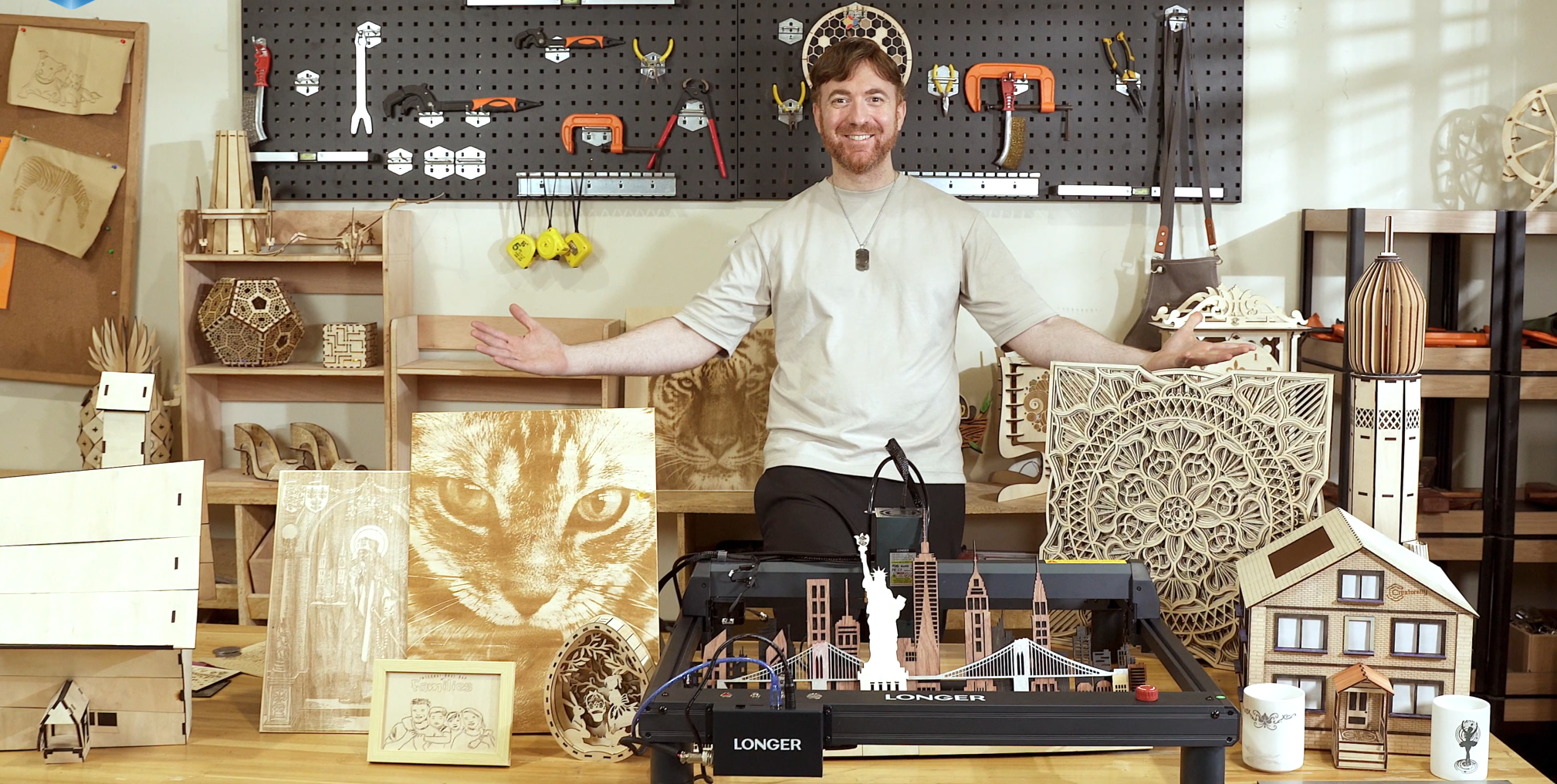
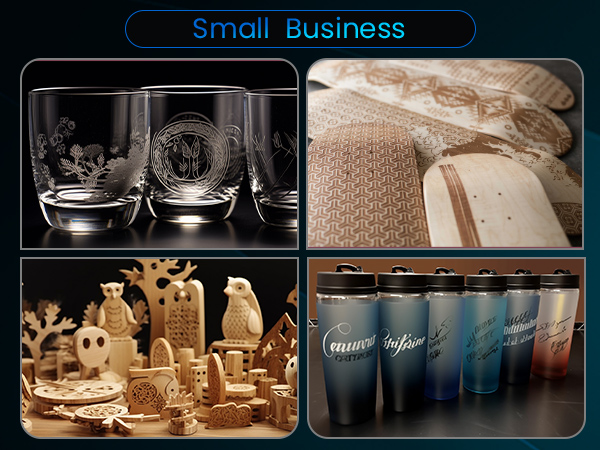
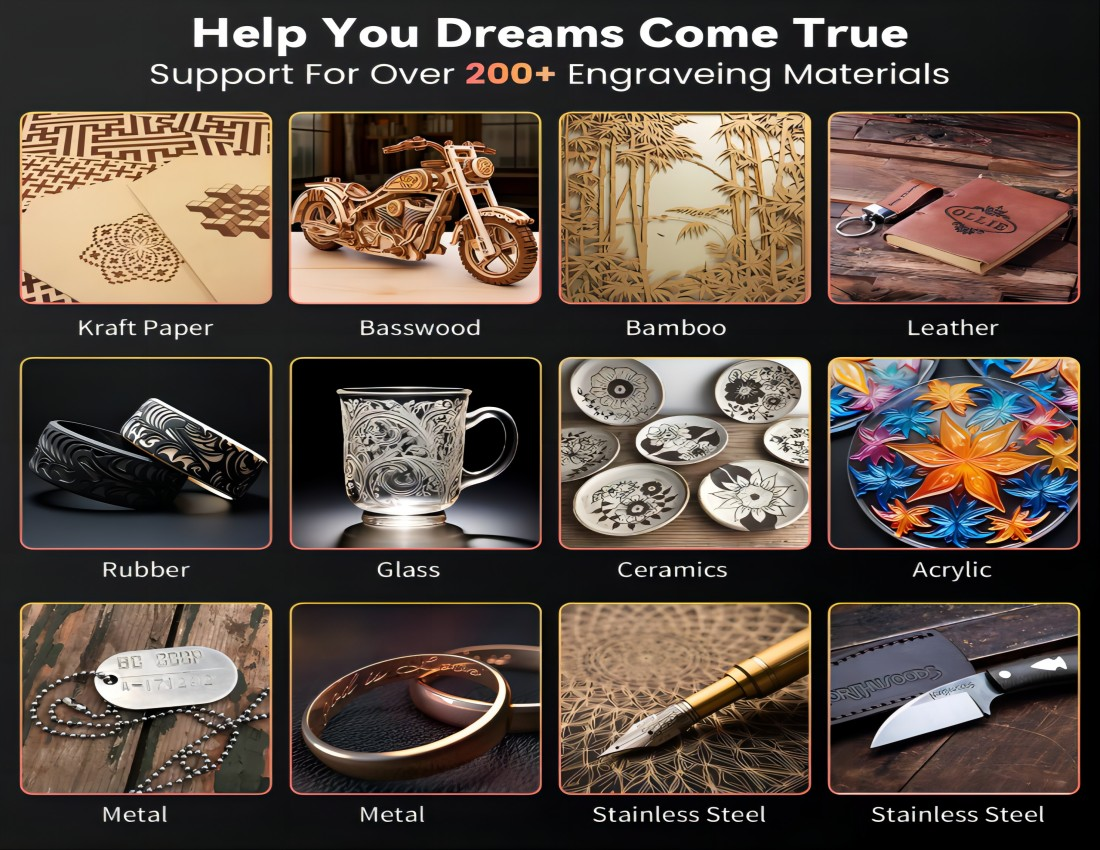
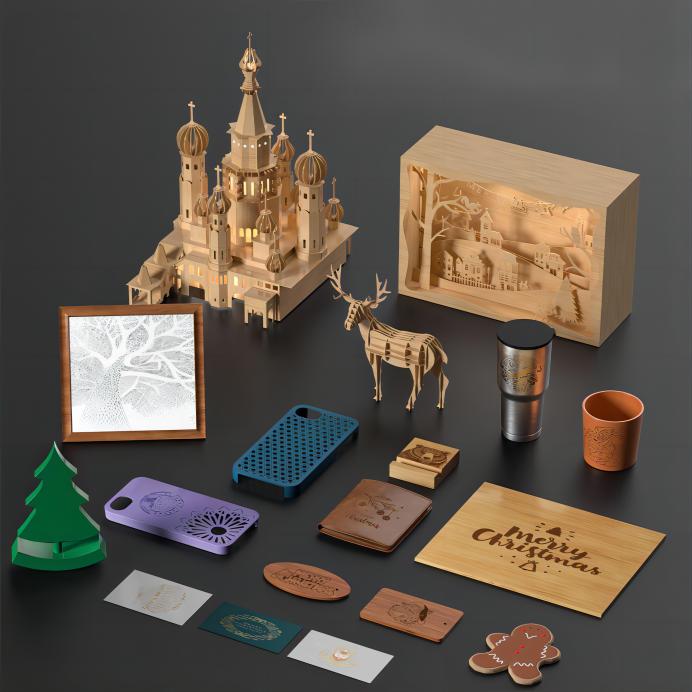
The versatility of the laser system extends to a wide array of materials, encompassing wood, acrylic, plastic, stone, metal, and more. For instance, it can engrave intricate designs and patterns on wooden surfaces, create personalized acrylic signage, etch serial numbers and logos onto metal parts, and even carve detailed images into stone surfaces. Moreover, it excels in adding serial numbers to tools, enhancing traceability and inventory management in manufacturing processes. Whether you're engraving intricate designs on jewelry, adding branding elements to promotional items, or personalizing gifts with custom messages, the laser system offers unparalleled versatility and precision across various materials and applications.

Engraving function

One of the basic functions of a laser engraving machine is the engraving function. On wood, metal or plastic, laser engraving machines can carve delicate patterns and text with extremely high precision. By adjusting the laser power and engraving speed, engraving effects of different shades and line thicknesses can be achieved.

Cutting function

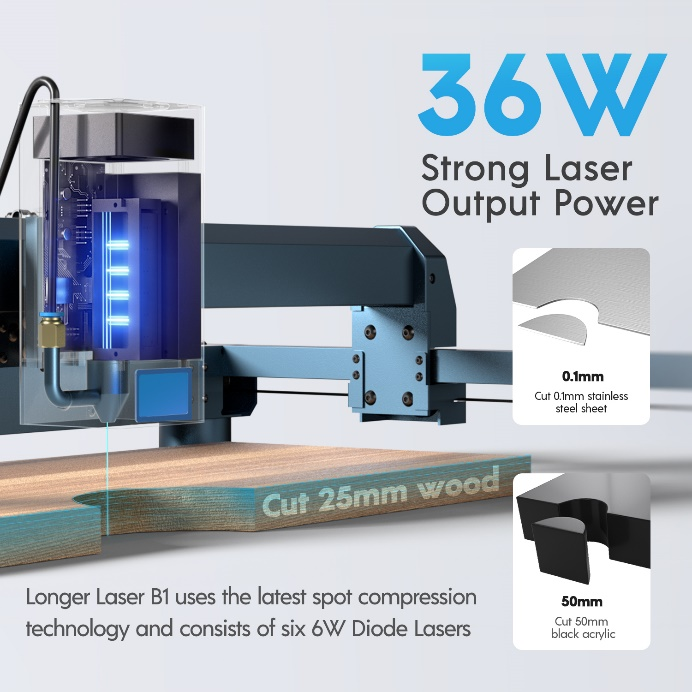
The cutting capability of laser engraving machines extends to a diverse range of thin materials, ensuring precise and clean cuts without any burrs or heat-induced deformations. From leather and cloth to paper and more, it effortlessly achieves accurate cutting results across various materials. For instance, LaserB1 30W can effortlessly cut through 20mm paulownia wood, 10mm black acrylic, and even thin stainless steel plates in a single pass. Additionally, it capable of handling materials as thick as 25mm basswood and 50mm black acrylic with ease. With its ability to achieve clean and precise cuts across a wide range of materials and thicknesses, the laser engraving machine proves to be an invaluable tool for various applications, from crafting and prototyping to industrial manufacturing and beyond.

Hole punch function
The laser engraving machine can also achieve the function of drilling holes in the material by adjusting the focus and power of the laser beam. Laser drilling has the characteristics of fast speed and high precision, and is suitable for mass production.

Marking function
Labeling products is an essential part of many industries. Laser engraving machines can engrave clear and durable marks on the surface of materials with extremely high precision, such as product numbers, production dates, etc. This marking method is not only beautiful and elegant, but also not easy to wear and tear, which helps to increase the added value of the product.

Personalized customization
The versatility of laser engraving machines also extends to personalization. Whether it is making personalized jewelry, gifts, or customizing exclusive seals, logos, etc. for enterprises, laser engraving machines can meet the personalized needs of users. With laser engraving machines, we can easily achieve the perfect combination of creativity and art.

Conclusion

As a cutting-edge laser application equipment, laser engraving machines have revolutionized our lives with their remarkable versatility. From engraving and cutting to punching, marking, and personalization, these machines cater to a wide array of industries, thanks to their exceptional precision, efficiency, and flexibility.

Established in 2016, LONGER boasts a team of research personnel hailing from renowned institutions such as the Massachusetts Institute of Technology, Georgia Institute of Technology, University of Manchester in the UK, The Autonomous University of Barcelona in Spain, and the University of Newcastle in Australia. The brand's founders, Dr.Lao and Dr.He driven by a determination to challenge the traditional market dominated by costly laser engraving machines, committed themselves to providing users with cutting-edge products offering exceptional value for money. LONGER 's products are renowned worldwide and hold a prestigious reputation among universities. In addition to the advanced B1 series, LONGER offers a range of highly professional products such as the beginner-friendly Ray5 series, Longer tailored to meet the diverse needs of experienced users.

With technology advancing at a rapid pace, LONGER is confident that laser engraving machines will continue to play an increasingly pivotal role in future production and daily life.

By Lasergravierer-Blog | April 9, 2024
Unleashing Creativity: The Evolution of Laser Engraving Technology

Laser engraving technology has rapidly evolved over the past decades, transforming from a specialized industrial process into an accessible creative tool for makers, designers, and small businesses. Today, laser engraving machines are widely used to turn everyday materials into personalized, detailed, and high-value creations.

From custom gifts to artistic works and functional products, this technology has opened new possibilities for creative expression with a level of precision that was previously difficult to achieve.

From Industrial Tool to Creative Platform

Originally, laser engraving systems were primarily used in industrial manufacturing for marking, cutting, and serial production. These machines required complex setups and were limited to professional environments.

However, advancements in laser diode technology, control systems, and software integration have significantly lowered the barrier to entry. Modern laser engravers are now more compact, user-friendly, and affordable, making them accessible to a much wider audience.

As a result, laser engraving has shifted from a purely industrial function to a creative platform for personalization and innovation.

Expanding Creative Possibilities

One of the most significant advantages of laser engraving technology is its ability to work with a wide range of materials, including:

  • Wood
  • Acrylic
  • Leather
  • Glass
  • Metal surfaces
  • Paper and cardboard

This versatility allows users to create diverse projects such as:

  • Personalized gifts
  • Custom home décor
  • Jewelry and accessories
  • Branding and product labeling
  • Artistic installations

With precise control over depth, power, and speed, even highly detailed designs can be accurately reproduced.

Precision and Control in Modern Laser Systems

Modern laser engraving machines are designed to deliver high precision and repeatability. Fine control over laser parameters enables users to achieve consistent results across different materials and project types.

Key technological improvements include:

  • Higher resolution engraving capability
  • Improved motion control systems
  • More stable laser output
  • Advanced software integration

These developments allow creators to move seamlessly from digital design to physical product with minimal loss of detail.

Empowering Makers and Small Businesses

Laser engraving technology has also become an important tool for entrepreneurs and small businesses. It enables on-demand production, customization services, and low-volume manufacturing without the need for large-scale industrial equipment.

This shift has empowered individuals to:

  • Launch personalized product businesses
  • Offer custom engraving services
  • Prototype designs quickly and efficiently

As a result, creativity is no longer limited by manufacturing constraints.

The Future of Laser Creativity

As laser technology continues to advance, we can expect even greater accessibility, precision, and automation. Integration with smart software, AI-assisted design, and improved material compatibility will further expand creative possibilities.

Laser engraving is no longer just a tool—it is becoming a bridge between digital imagination and physical reality.

Conclusion

The evolution of laser engraving technology has fundamentally changed the way people create, design, and manufacture. By combining precision engineering with creative freedom, it enables users to transform simple materials into meaningful and personalized works of art.

As this technology continues to develop, its role in both creative industries and everyday life will only continue to grow.

By Lasergravierer-Blog | April 8, 2024
Exploring the Principle, Development, and Applications of Infrared Lasers

Infrared lasers are key optical devices in modern photonics, playing an essential role in communication, medicine, industry, military systems, and scientific research. As a core technology in laser processing, infrared lasers enable high-precision energy delivery and have become foundational tools in advanced manufacturing.

Leveraging deep expertise in laser systems, LONGER has been actively engaged in laser engraving technology research and development since 2016. Over the past 8 years, the company has continuously advanced optical design and system integration, delivering a diverse portfolio of high-precision laser engraving machines, ranging from desktop-level devices to industrial-grade solutions.

LONGER laser engravers, including the high-speed RAY5 series and the high-power B1 series, reflect years of engineering optimization and innovation. These systems are widely recognized for their stability, precision, and performance across various application scenarios.

1. Principle of Infrared Lasers

Stimulated Emission

Infrared laser operation is based on the principle of stimulated emission. In the active medium (solid, gas, or semiconductor), atoms or molecules are excited to higher energy states. When an incoming photon interacts with an excited particle, it triggers the release of a second photon with identical energy, phase, direction, and frequency. This process results in coherent light amplification, forming the basis of laser generation.

Optical Resonance

A laser cavity, composed of two mirrors (one fully reflective and one partially reflective), enables optical resonance. Light reflects back and forth within the cavity, repeatedly interacting with the gain medium. Only photons matching the resonant frequency are amplified, while others are suppressed. This selective feedback mechanism produces a highly coherent and directional laser beam.

2. Development of Infrared Lasers

Early Stage (1960s)

Initial infrared laser research focused on gas and solid-state lasers, such as CO₂ lasers. Although these systems demonstrated early success, they were limited by large size, high energy consumption, and high production costs.

Rise of Semiconductor Lasers (1970s–1980s)

Advances in semiconductor technology led to compact, efficient, and cost-effective infrared semiconductor lasers. These devices significantly expanded laser applications, especially in optical communication and medical systems.

Modern Development (1990s–Present)

Continuous technological improvements have greatly enhanced infrared laser performance. Today, they are widely used in:

  • High-speed fiber-optic communication systems
  • Medical laser surgery and diagnostics
  • Military targeting, guidance, and infrared imaging systems
  • Industrial precision processing

Infrared lasers have become a core enabling technology across multiple industries.

3. Applications of Infrared Lasers

Communication

Infrared lasers serve as key light sources in fiber-optic communication, enabling high-speed, long-distance data transmission. They are also used in optical modulation and wireless infrared communication systems.

Medicine

In healthcare, infrared lasers are widely used in surgical procedures, ophthalmic treatment, dermatology, and diagnostic imaging technologies such as OCT (Optical Coherence Tomography), providing high precision and minimally invasive solutions.

Military

Infrared laser systems are critical in target tracking, missile guidance, night vision, and infrared imaging technologies, significantly improving detection accuracy and operational efficiency.

Scientific Research

Infrared lasers are essential tools in spectroscopy, atomic physics, chemical analysis, and optical experimentation, enabling precise measurement and material characterization.

Industrial Processing

Infrared lasers are extensively used in cutting, welding, engraving, drilling, and surface treatment of materials such as metal, plastic, glass, and ceramics, significantly improving manufacturing efficiency and product quality.

4. Conclusion

Infrared laser technology plays a fundamental role in modern scientific and industrial development. Its principles of stimulated emission and optical resonance enable highly precise and controllable energy output, supporting a wide range of advanced applications.

With strong capabilities in optical system design and engineering, LONGER continues to advance infrared laser technology through continuous innovation and product development. The company’s laser engraving systems reflect a deep understanding of laser physics and real-world application needs, setting new standards in precision, reliability, and performance.

As laser technology continues to evolve, infrared lasers will remain a critical driver of innovation across industries. LONGER is committed to advancing this field through sustained research and development, empowering users with more efficient, precise, and intelligent laser solutions for the future.

By Lasergravierer-Blog | April 7, 2024
Tips for engraving glass using laser engraving machine

Laser engraving on glass using diode technology is a versatile craft that finds its place in contemporary artistry and manufacturing. In the realm of art creation, this technique empowers artists to intricately etch stunning patterns, text, and textures onto glass surfaces, crafting exquisite sculptures, decorative pieces, and more. Similarly, diode laser engraving is a staple in manufacturing, facilitating the production of ornaments, accessories, and personalized gifts with unparalleled precision and customization options, meeting the demand for top-quality craft products in the market.

Longer's diode laser engraving serves as an efficient solution for personalized engraving services, offering tailored options for souvenirs, trophies, and keepsakes from 2016. In architecture, Longer lends itself to the decoration and customization of glass elements in buildings, infusing spaces with unique artistic flair and bespoke designs. With its attributes including precision, automation, versatility in achieving various effects, and the ability to maintain glass surface smoothness, diode laser engraving emerges as a pivotal technology in glass processing and decoration, unlocking endless creative and manufacturing opportunities for creators and businesses alike.


Tip 1: Clean the Glass Surface Before Engraving

Cleaning the glass surface is a crucial first step before engraving. It not only helps ensure the accuracy and quality of the engraving but also prevents adverse effects during the process. Cleaning removes dirt, grease, and other impurities from the surface, ensuring that the laser can accurately irradiate the glass. Additionally, a clean glass surface aids in the uniform propagation of laser energy, avoiding excessive local heat that may cause glass breakage or uneven engraving effects. Therefore, it is essential to thoroughly clean the glass surface before engraving, using ethanol and a lint-free cloth to wipe it clean.

Tip 2: Apply Paint to the Engraved Glass Surface

Applying paint to the glass surface during engraving is a critical technique. By applying acrylic paint, the refraction of the laser is reduced, allowing the glass to absorb energy more fully and maintain stability during laser engraving. Additionally, spraying black paint or adhering colored paper is also a common method.

Tip 3: Clean the Engraved Glass Product

After waiting for the laser engraving to complete and cool down, use an appropriate solvent or cleaner (such as acetone, alcohol, or paint remover) to spray or apply it to the painted areas. These chemicals can typically dissolve the paint, making it softer and easier to remove. After spraying, gently wipe the painted areas with a soft cloth.

The above tips provide key techniques for achieving laser engraving on glass materials. LONGER is definitely a great helper for making glass decorations. Currently, the RAY5 and Laser B1 series machines have been released. The RAY5 series engraving machine is equipped with a 0.08*0.08mm compressed laser spot, which focuses energy more, perfectly combining simplicity with precision, making it an ideal choice for beginners entering the world of engraving and cutting. Meanwhile, the Laser B1 series machine boasts a engraving speed of up to 36000mm/min, standing out with its powerful functionality, meeting the needs of experienced creators proficient in engraving and cutting techniques.

Explore Ray5 20W at https://www.longer3d.com/products/ray5-20w-laser-engraver and Laser B1 30W https://www.longer3d.com/products/longer-laser-b1-30w-laser-engraver to learn more and elevate your glass engraving journey with Longer.

By Lasergravierer-Blog | April 7, 2024
Unleashing Creativity: Crafting Unique Jewelry with Our Laser Engravers

In jewelry making, customization will remain trendy in making the accessories unique and impressive. Whether you want to create meaningful inscriptions or bespoke designs, jewelry customization offers you an opportunity to express your distinctive sentiments or style. At the core of the personalization evolution is innovation and creativity and that's our specialty. At Longer, we use the exemplary power of laser technology to develop impressive tools for making unique jewelry. Our jewelry laser engravers can help you release your creative juices, giving you the ability to turn ordinary accessories into extraordinary treasures.

The Magic of Laser Engraving

Laser engraving is a marvelous technology that has improved the efficiency of modern engineering. It uses a highly powered laser beam to inscribe designs on diverse materials accurately. The flexibility it offers is also incomparable to the conventional engraving methods. Forget the restrictions of manual engraving! This laser tackles even the most intricate designs with unmatched precision. Hard or delicate, the material doesn't matter.

Engraving Just Got Awesome! This laser engraver isn't your grandpa's tool! It tackles intricate designs with crazy precision on all sorts of materials. Think sparkling gemstones, smooth glass - no sweat! Forget limits, this engraver lets you create show-stopping masterpieces. The machine's enhanced precision has completely changed the jewelry industry, unveiling new opportunities for creativity and personalization.

Why Choose Our Jewelry Laser Engravers

When examining the reliability and effectiveness of jewelry engraving machines, you will discover the Longer is the best option due to the following reasons. Our engravers have outstanding features such as accessibility to pros and beginners, user friendly interface, enhanced precision, and dependability in producing top-tier engraving endlessly.

When you compare our machines to the conventional ways of engraving, you will discover they have various advantages such as improved speed, unmatched precision, ability to engrave a broad range of materials. Furthermore, laser engraving has a non-contact nature that minimizes the risk of damage of very delicate pieces, giving you peace of mind while working.

Crafting Unique Jewelry Pieces

With our cutting edge laser engravers, you can uncover new possibilities in jewelry making, which you never thought existed. It doesn't matter if you are carving complex patterns on a pendant or customizing a gemstone ring, our machines can enable you to do these tasks cheaply. The flexibility of our machines will allow you to engrave with diverse materials from semi-precious stones to valuable metals.

The Longer engravers are popularly used for creating tailored rings. This machine enables crafts men to etch heartwarming messages, dates, or names, giving the ring a personal touch and enhancing its worth.

Another benefit that our machine offers is the aptitude of creating very complicated patterns and designs. With its help, you won't stress while crafting detailed motifs on your earrings, bracelets, and pendants, making simple jewelry extraordinary. These engravers also make it easier for users to etch anything on very delicate material without fear and risk of damaging it.

Tips and Tricks for Perfect Engraving

If you desire optimum results while using our jewellery engraving machine, it is vital to follow practical tips shared by the pros. First, make sure your engraving material is properly fixed in place to curb unnecessary movement while you're engraving it to maintain the design's accuracy. 

When commencing the engraving with the jewelry laser engraver, start the process with low power settings and if necessary increase it gradually. This will hinder the damaging and burning of the material. Furthermore, don't forget to put on the protective eyewear when using the laser engraver.

The mistakes many users make when using this machine is overloading it with design complexities and too much information. No need to jump into the deep end with super complex designs! Start with simpler ones and gradually explore your laser engraver's capabilities. Before you know it, you'll be a master engraver creating stunning, intricate pieces!

Don't overlook your laser engraver's needs! Regular maintenance is the hidden gem behind its smooth operation and exceptional outcomes. By investing a little time and care, you'll ensure countless fruitful projects with your trusty companion. Have a schedule for cleaning the mirrors and lens regularly and be on the lookout for moving parts and signs of wear and tear. Also, boost the machine's efficiency and functionality by updating the software regularly.

Inspiring Ideas for Your Next Project

Our ring and jewelry engravers enable artists to express themselves in many ways on their pieces without any limitation. They enable them to add a personal touch on jewelry with special quotes or dates. Such jewelry pieces always hold more value to the loved one.

You can also engrave on diverse materials to add depth and texture to your designs. For instance, to get a unique look, try engraving on wood and acrylic or combine metals to achieve a mixed-media effect. The flexibility of our jewelry engraving equipment will enable you to do more than you could with conventional methods of jewelry design.

The Future of Jewelry Engraving with Longer

As we focus on the future, we are dedicated to unearthing new possibilities in jewelry engraving. We are engaging in numerous researches and developmental efforts that will enable us to add advanced features and capabilities to our jewelry engravers, so that we continue keeping up with new inventions and technologies.

We are also working to ensure the laser engravers not only personalize jewelry but also enable artists and makers to create unimaginable intricate and multi-dimensional designs. The continuing advancements in laser technology are also enabling us to provide greater versatiliy and enhanced precision.

At the moment, we are looking for an effective way of incorporating machine learning and AI into our laser engravers in order to revolutionize the way designs can be executed and created. This integration could unveil new methods for predictive maintenance, intuitive interfaces, and automated design generation.

At Longer, we are impressed about jewelry engraving's bright future and our part in making it better. We will always ensure our clients have the best equipment for tailoring their jewelry.

In Conclusion

We have unearthed the remarkable potential of our laser engravers in improving jewelry making. Our machines come with every feature required to make magnificent pieces such as user friendliness, versatility, and accuracy. They make crafting jewelry with complicated patterns and designs easier.

While using our machines, you have the liberty of engraving diverse designs and patterns on different materials to maximize their potential. Your skill level in engraving won't limit your creative potential if you choose our laser engravers.

Therefore, we take this chance to invite you to actively participate in our adventure towards making top-tier tailored jewelry. As long as you partner with Longer, you will discover that the only limitation is your imagination.

By Lasergravierer-Blog | April 5, 2024
Longer Laserburn App - Longer B1  handbook
Longer Laserburn App - Longer B1 handbook

In the previous Longer Academy article, it was seen how to properly connect the Longer B1 with the Longer Laserburn app. After successfully completing the connection, you can start using the app to control the laser engraving and process the files to be engraved.


Longer Laserburn allows you to move the laser within the work area, switch the laser beam on and off, define the homing position, transfer files, start an engraving, monitor engraving information, enable air assist and so on. Thanks to Longer Laserburn, your Smartphone becomes not only a remote display for Longer B1, but also a powerful device for processing your work. After the connection is successful, remote use can be operated.


The Longer Laserburn Home screen shows at the top the current X/Y coordinates and the S intensity of the laser, while at the bottom there are some buttons to access the corresponding submenu.

1. Creation
It allows you to process an existomg image or create new image file, and slicing for engraving, exactly as you do when using desktop Lightburn, in an easy and comfortable way from your smartphone. The section “material” contains some sample images, to use as test engraving or test cutting; also, “text” will allow you to create some personalized messages, and it’s also possible build some QRcodes directly from app.

A.Import an image or create your personalized image file directly in app.

B.In the next step you can edit the image by manually setting brightness, contrast and other effects, including the dimensions and positions.

C.In the last step you can configure file engraving speed, laser power, M3/M4 mode and more, as fill or line mode, air assist, and many other settings exactly as you usually do with Lightburn for laptop. Like for Lightburn, you can set different Layer settings in Laserburn app, in order to set different parameters for each image to engrave.

D.After finishing adjusting the parameters, you can slice and upload it via WiFi to the B1 microSD. After B1 has received it successfully, you will enter the engraving page from which you can monitor the progress of the processing status.


2. Control
It allows you to move the laser module within the processing area and different steps and speed of movement can be set; you can also go back to homing, define a new homing position, turn the laser beam on and off, etc.


3. Material
There are some graphic samples to be used to determine the best parameters for engraving or cutting on different materials. Once you have chosen the image to carry out the various tests, set the various parameters (please refer to the "Creation" paragraph).


4. Files
The list of files on the microSD card inserted inside Longer B1 is shown, and you can select a file to engrave again.


5. History
This is the record of the files engraved or cut previously. You can monitor which files you engraved or cut already, and how many times you processed them already.

By Lasergravierer-Blog | March 26, 2024
An Exploration of Operational Processes and Safety Standards in Laser Engraving Machines

In the manufacturing and art fields of today's society, laser engraving machines have become a vital tool. These advanced devices use laser beams to precisely engrave and cut on various materials to create a variety of creative works, allowing users to realize their creative ideas and providing users with unlimited creative possibilities. However, as the application scope of laser technology continues to expand, the emphasis on operating procedures and safety standards has become increasingly prominent. For the personal safety of operators and the good operation of machinery and equipment, laser engraving machines must be inspected and used in accordance with specifications, and good specifications must be formed in long-term work to achieve standardization.

Laser Engraving Machine Operation Process

The operating process of a laser engraving machine usually includes the following preparations:

  • Preparation work: The user needs to prepare the laser engraving machine. Users must ensure that the equipment is turned on and operating normally before use, and also check whether the laser head and lens are clean. In addition, they need to prepare the required engraving materials and design files.
  • Parameter setting: Before starting engraving, the operator needs to set appropriate parameters according to the type and thickness of the selected material, as well as the desired engraving effect. For example, if you are using a Longer Laser B1 series high-power engraving machine, you can set parameters between 20-40W to engrave some harder wood.
  • Import the design: Next, the operator imports the designed pattern or text into the control system of the laser engraving machine through computer software. Generally they can adjust the size, position and orientation of the design to ensure the final engraving is as intended.
  • Positioning calibration: Before starting engraving, the operator needs to ensure that the material is correctly positioned and fixed on the laser engraving machine's workbench. They may need to use a red laser pointer to align the engraving position to ensure the accuracy and consistency of the engraving.
  • Start engraving: After everything is ready, the operator can start the laser engraving machine to start engraving. The laser beam moves along a designed path according to preset parameters, gradually engraving patterns or text onto the material surface.
  • Monitoring and adjustment: During the engraving process, the operator needs to closely monitor the operation of the laser engraving machine to ensure that the engraving process proceeds smoothly. They may need to adjust parameters or stop carving as needed to ensure the final result is as expected.
  • Cleaning and maintenance: After engraving is completed, the operator needs to clean the work area and maintain the laser engraving machine in time. This includes removing material residue, inspecting and cleaning the laser head and lenses, and ensuring proper operation of the equipment.

The above is the general operating process of a laser engraving machine. The specific steps may vary according to different equipment and applications.

Safety standards for laser engraving machines

 Since laser engraving machines use high-energy laser beams, safety standards must be strictly followed during operation to prevent accidental injuries and equipment damage.

  • First of all, operators need to receive professional training to understand the working principles, safe operating procedures and emergency handling methods of laser equipment.
  • Second, you must wear appropriate personal protective equipment, such as goggles and gloves, to protect yourself from laser radiation and material splash. Some machines are equipped with protective devices. For example, the panoramic filter glass laser module of the Longer Laser B1 series laser engraving machine uses panoramic filter glass to block blue light and filter out 97% of ultraviolet rays, providing good protection for the eyes.
  • In addition, the laser engraving machine must be installed in a well-ventilated working environment to prevent the accumulation of harmful gases and dust.
  • Finally, during operation, operators should always pay attention to the operating status of the equipment and be ready to respond to emergencies at any time, such as emergency shutdown or fire extinguishing.

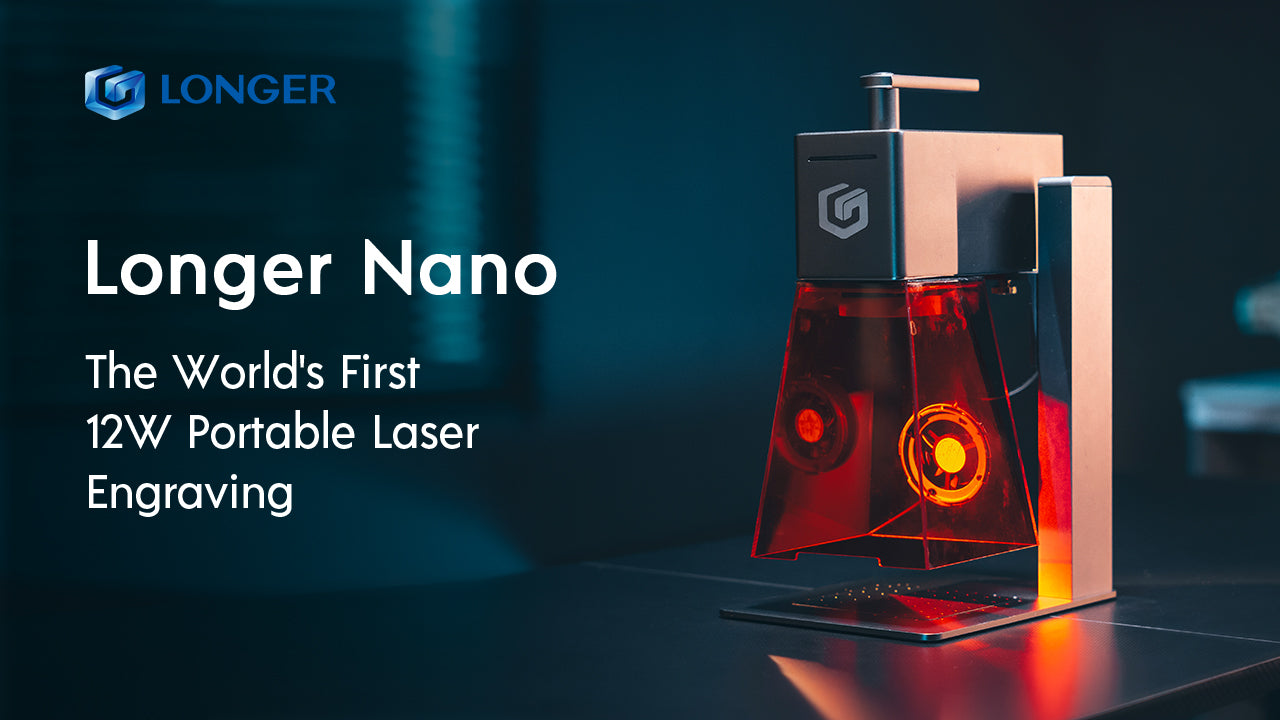
 Longer brand laser engraving machines are known for their ease of operation and greater safety. The device is equipped with an intuitive and easy-to-use control panel and software interface, allowing users to easily set parameters, import design files and start the engraving process.Longer is fully compatible with industry-leading software such as LightBurn and LaserGRBL, as well as LongerBum, developed independently by Longer. LongerBurn can adapt to both Android and IOS mobile platforms. LongerBurn can be connected to Laser B1 series and Nano series laser engraving machines through WIFI, and has multiple functions such as drawing creation, engraving preview, machine control, material library, and historical records to meet the diverse needs of users. In addition, Longer adopts advanced safety technology and design to ensure the safety of personnel and equipment during the laser engraving process. Longer brand laser engraving machines can not only meet users' needs for high-quality engraving and cutting, but also ensure users' operating experience and safety, safeguarding your creativity and production.

The operating process and safety standards of the laser engraving machine are key factors to ensure the normal operation of the equipment and the safety of personnel. Only through strict operating procedures and safety measures can we give full play to the advantages of laser technology and provide users with high-quality engraving and cutting services. Therefore, when using a laser engraving machine, be sure to keep the operating procedures in mind and always put safety first.

By Lasergravierer-Blog | March 19, 2024