Lasergravierer-Blog

How to Troubleshoot Touchscreen Black/White Screen Issues on Your Laser Engraver

Experiencing a black or white screen on your touchscreen panel can be frustrating, but the good news is that most issues can be diagnosed—and often resolved—through a structured step-by-step approach.
This guide walks you through three stages of troubleshooting, from simple checks to deeper hardware diagnostics.

Stage 1: Quick and Basic Checks

1. Verify Power Supply

  • Check the power adapter: Ensure the adapter’s indicator light is green.

  • Confirm power switches: Make sure both the main power switch and the emergency stop switch are turned ON.

  • Observe LEDs: Look at the controller box or mainboard to check if any status or power LEDs are illuminated.

    • If the adapter is green but the machine shows no lights at all, the problem may be in the controller box.

2. Perform a Full Restart

Completely shut down the machine, unplug the power cable, wait 1–2 minutes, then reconnect and restart.
This helps resolve temporary system freezes or UI boot issues.

3. Check Screen Brightness (for dark screens with backlight on)

Some touchscreens have independent brightness controls.
If the screen looks “black” but still emits backlight, try adjusting the brightness through the touchscreen’s internal settings.

4. Consider Auto Sleep Mode

Many touchscreens include auto-sleep/auto-dimming features.
If the screen is blank after idle time but the machine still works, tap the screen or restart to wake it.

5. Listen for Startup Sounds

Check whether the mainboard or controller emits any boot-up beeps or activity noises.

  • If yes → The system may be functioning, but the screen or its connection may be faulty.

  • If silent, the issue may lie in the mainboard or power distribution.

Stage 2: Internal Cable and Hardware Checks

⚠ Important: Before starting this stage, ensure the machine is fully powered off and the power cable is unplugged. Safety first!

1. Inspect the Touchscreen Cable

Most laser engravers use a ribbon cable or FPC cable.

Steps:

  • Open the controller box or the touchscreen housing to locate the cable connecting the touchscreen to the mainboard.

  • Reconnect both ends:

    • Gently disconnect the cable from both the screen and the mainboard.

    • Inspect for bent pins or loose connectors.

    • Clean the gold contacts with a rubber eraser or dry cloth.

    • Reinsert firmly and lock the latch.

2. Check for Cable Damage

Look for:

  • Creases

  • Crushed sections

  • Burn marks

  • Broken copper traces

Any visible damage means the cable should be replaced.

3. Test Using the Replacement Method (Most Effective)

  • Option A: Swap in a known working touchscreen
    If the replacement works, then the original touchscreen is faulty.

  • Option B: Connect the problematic touchscreen to a known working machine
    If the issue persists, the touchscreen is confirmed defective.

Stage 3: Identify Core Component Failures

If none of the previous steps resolve the issue, the problem is likely within the core modules.

1. Touchscreen Hardware Failure

A very common cause.

Symptoms:

  • Screen permanently black or white

  • No boot logo or flickering

  • No response despite cable replacement

Causes may include aging, vibration, unstable voltage, or manufacturing defects.

Diagnosis:

  • Confirmed via replacement test in Stage 2.

2. Mainboard/Control Board Failure

The display output circuit on the mainboard may be damaged.

How to judge:

  • If the machine can still move axes, the laser fires, and the LEDs respond normally:
    → The mainboard is likely fine; the issue is with the touchscreen or cable.

  • If the entire machine is unresponsive, with no lights or movement:
    → The mainboard or power distribution system may be faulty.

Final Notes

By following this structured approach—from basic checks to full hardware verification—you can quickly narrow down the root cause of touchscreen display issues. If you identify a defective screen, cable, or mainboard, contact customer support with your findings for a faster resolution.

By Lasergravierer-Blog | November 24, 2025
Ray5 Series Firmware Upgrade

The bug has been fixed and will no longer occur after upgrading to the latest firmware.

The firmware of RAY5 is continuously updated to fix bugs and add new features. The firmware upgrade operations are different for different systems. The detailed tutorial about firmware upgrading is contained in the firmware package. Please download the RAY5 firmware package from the LONGER official website: RAY5 firmware downIoad

Install the MKSLaserTool-setup V1.1.2.exe file, click MKS ESP32 Download Tool, select the right port and .bin update firmware, and click Start. It will prompt "firmware successfully flashed" after the update is completed.

Copy the dic-cfg.txt file from the configuration folder to the root directory of the SD card, insert the SD card into the main board of the engraver, and restart the engraver, and the configuration file update will be completed automatically.

By Lasergravierer-Blog | November 24, 2025
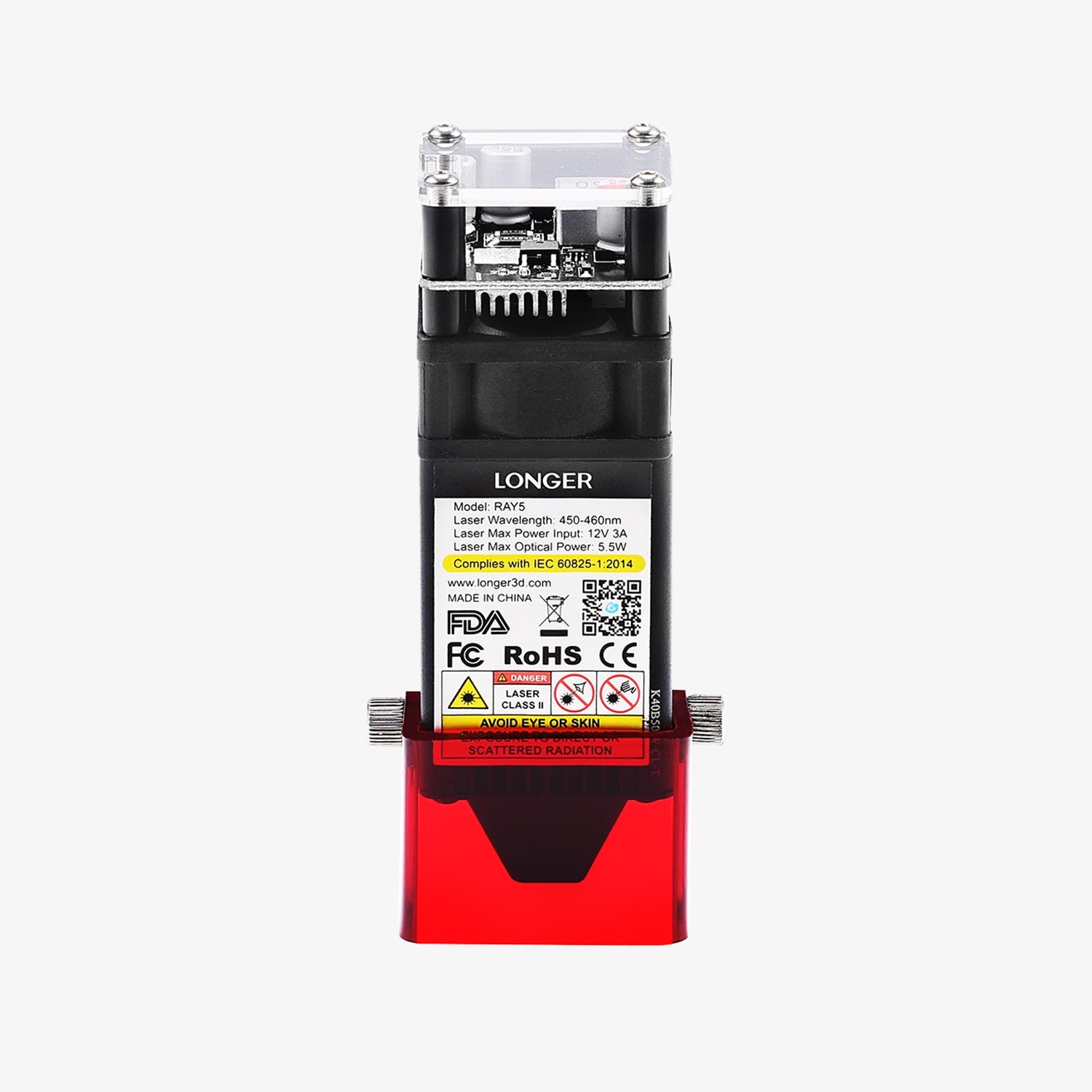
Laser Fan Replacement for Ray5 10W / 5W

1、Use a Phillips screwdriver to unscrew the screws.

2、Disconnect the fan cable from the mainboard and remove the fan.

3、Connect the new fan's cable to the mainboard and install the fan into the laser head, making sure the intake side faces up and the exhaust side faces down.

4、Secure the fan again using a Phillips screwdriver.

By Lasergravierer-Blog | November 11, 2025
Lens Window and Nozzle Cleaning for Ray5 10W / 5W

Cleaning the lens window and nozzle of a laser engraver is an essential and routine maintenance task.
A dirty lens window can severely reduce laser power, causing weak or uneven engraving/cutting.
A clogged nozzle can disrupt the flow of assist air, resulting in poor cutting quality and even potential damage to the laser head due to insufficient cooling.

Below is a detailed and safe cleaning guide.

Core Principles: Safety First!

Power Off and Cool Down:
Always turn off the laser engraver and unplug the power cord before cleaning.
Wait until the laser head is completely cool, especially after recent use when it may still be very hot.

Extreme Gentleness:
Both the lens window and nozzle are delicate and fragile (especially the coating on the lens surface).
Any scratch can cause permanent damage. Handle with care and apply very light pressure during cleaning.

Use Proper Tools:
Prepare professional cleaning tools.
Avoid using paper towels or clothing that can leave fibers or cause scratches.

Part 1: Cleaning the Laser Head Lens Window

The lens window protects the internal mirrors and lenses of the laser module, and it is the most likely component to accumulate smoke and dust.

Required Tools:

Anhydrous alcohol (≥99% purity): Evaporates quickly without leaving water stains.
Avoid medical alcohol, which contains water and other additives.

Lint-free cotton swabs/lens cleaning sticks: With wooden or plastic handles wrapped in microfiber.

Air blower/camera dust blower: For removing large dust particles.

Gloves (optional but recommended): Prevent fingerprints and oil stains.

Cleaning Steps:

1. Remove the Lens Window:

Gently unscrew the lens holder (usually counterclockwise).

Place the lens on a clean, soft surface such as lint-free paper or tissue.

2. Blow Off Dust:

Use the air blower to gently blow both sides of the lens to remove surface dust and particles.
This prevents scratches during wiping.

3. Alcohol Cleaning:

Take a new lint-free swab and apply 1–2 drops of anhydrous alcohol—it should be damp, not dripping.

Start from the center of the lens and gently wipe outward in a spiral motion.
Do not wipe back and forth.

Use a new swab, moistened again with alcohol, to repeat the spiral cleaning for a deeper cleanse.

4. Dry and Inspect:

Use a clean, dry, lint-free swab to absorb any residual alcohol, again moving from center outward.

Hold the lens toward a light source (e.g., phone flashlight) and inspect from multiple angles.
Ensure there are no fingerprints, watermarks, or dust.
If contamination remains, repeat the previous steps.

5. Reinstall the Lens:

Ensure the lens holder is clean (use the air blower if needed).

Carefully reinstall the lens in its original orientation (the coated side usually faces inward—if unsure, refer to its direction before removal).

Screw the retaining ring back securely but not too tightly to avoid cracking the lens.

Part 2: Cleaning the Nozzle

The nozzle directs assist air (or oxygen/nitrogen) to the cutting point, helping to remove molten material and provide cooling.
It often becomes clogged with smoke residue or melted debris.

Required Tools:

Same as those for lens cleaning: anhydrous alcohol and lint-free swabs.

Fine needle, nozzle cleaner, or toothpick (for unclogging small holes).

A small container (for soaking the nozzle).

Cleaning Steps:

1. Remove the Nozzle:

The nozzle is usually threaded under the laser head. Unscrew it counterclockwise.

Be aware that some accumulated dust may fall out.

2. Physical Unclogging:

If the nozzle outlet is blocked by molten debris, use a fine needle or nozzle cleaner to gently clear the hole.
Be very careful not to enlarge or scratch the inner surface—this could affect airflow precision.

For double-layer nozzles, check the gaps between layers for blockage.

3. Soaking and Brushing:

For stubborn oil or residue, soak the nozzle in anhydrous alcohol for 10–15 minutes.

After soaking, use a lint-free swab or a soft brush (like an old toothbrush) to gently clean the inside and outside of the nozzle, especially around the outlet.

4. Rinse and Dry:

Rinse the nozzle again with fresh anhydrous alcohol.

Use the air blower to completely dry both the inside and outside of the nozzle, ensuring no moisture remains.
This is critical, as moisture can affect cutting performance.

5. Reinstall the Nozzle:

Once fully dry, screw the nozzle back into place.
Tighten it securely, but avoid overtightening to prevent thread damage.

Recommended Cleaning Frequency

Daily / Before Each Use:
Use an air blower to remove surface dust from the lens window and nozzle.

Weekly or Every 40 Hours of Operation:
Perform a full visual inspection and clean thoroughly if any contamination is visible.

Clean Immediately If Any of the Following Occur:

Laser power output drops noticeably (cutting depth decreases at the same power).

Engraving/cutting lines become uneven or blurry.

Sparks are unusually large or have strange colors during cutting.

A garlic-like (ozone) smell appears—this may indicate lens contamination causing beam refraction.

By Lasergravierer-Blog | November 11, 2025
Laser Window Lens Replacement for Ray5 10W / 5W

1. Remove the laser protective cover
Rotate the pump connection port counterclockwise to remove it.

Use an M1.5 hex wrench to loosen the nozzle screws through the small hole under the dovetail slot, then remove the nozzle (for 10W lasers).

10W

2. Unscrew the window lens counterclockwise.  

3. Install the new window lens, then reattach the nozzle and pump connection port.

By Lasergravierer-Blog | November 11, 2025
Laser Module Replacement for Ray5 10W / 5W

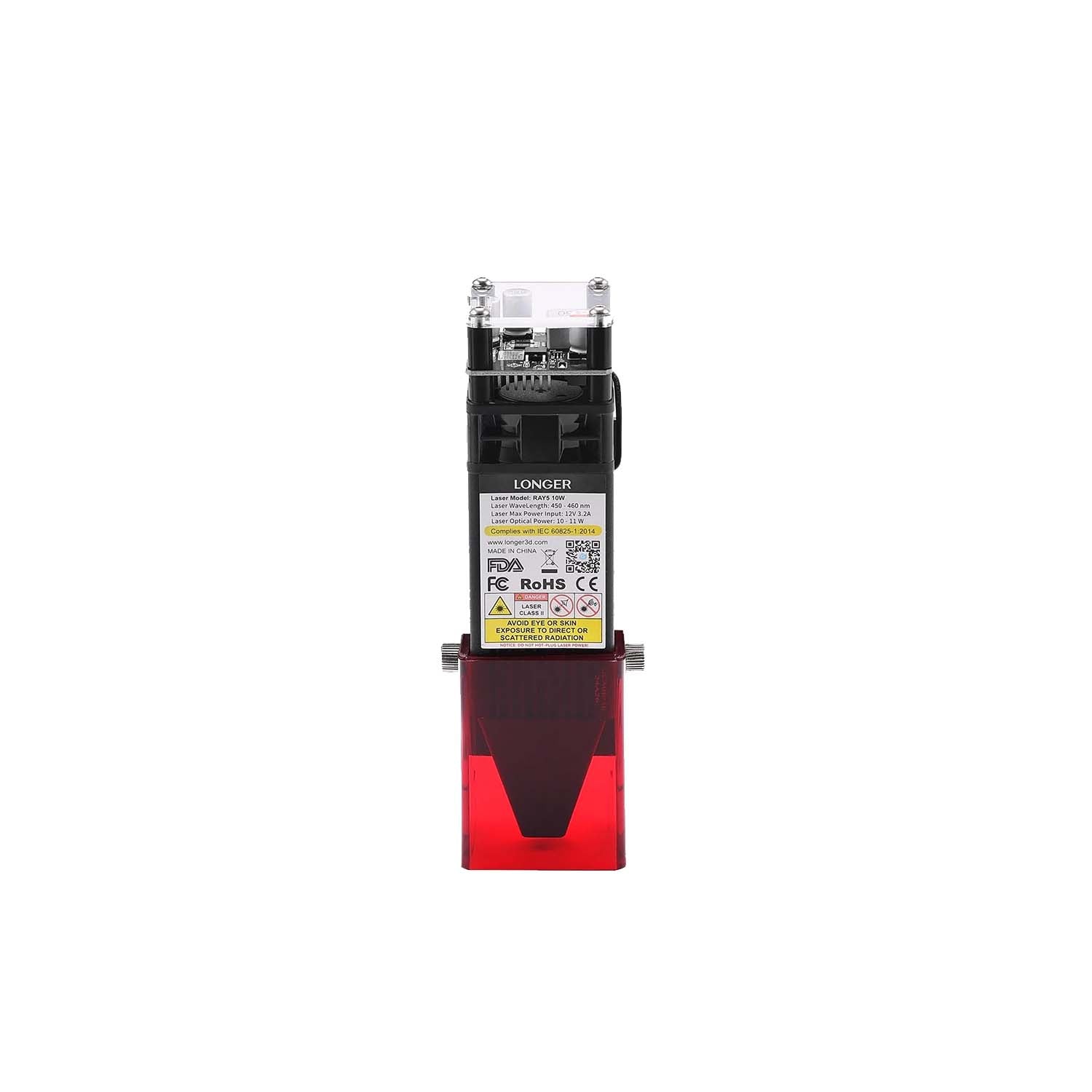
First, unplug the laser module’s cable. Turn the M420 hand screw clockwise to loosen it and remove the original laser module. Then, install the new laser module onto the X-axis frame and turn the M420 hand screw counterclockwise to tighten and secure the laser module.

By Lasergravierer-Blog | November 11, 2025
Motor Replacement for Ray5 10W / 5W

Replacing the X-axis or Y-axis motor is similar and not dependent on the machine model. This example uses the Ray5 40W X-axis motor.

1. Unplug the X/Y-axis motor cable. 

2. Loosen the X/Y-axis timing belt.

3. Use a 2.5 mm hex wrench to loosen the four screws and remove the X/Y-axis motor.

4. When installing the new motor, the X-axis motor connector should face left, and the Y-axis motor connector should face backward. Make sure the timing belt is properly seated on the coupling and adjusted to the correct tension, then plug in the motor cable. Motor replacement is complete.

By Lasergravierer-Blog | November 11, 2025
Display Screen Replacement for Ray5 10W / 5W

1. Use an M5 hex wrench to loosen the screws securing the control box, then remove the control box.

2. Use an M2 hex wrench to loosen the screws on the back panel of the control box and open the control box.

3. Disconnect the cable from the display’s mainboard.

4. Use an M2.5 hex wrench to loosen the screws on the mainboard and remove the old display screen. Install the new display screen, secure it with the original screws using the M2.5 hex wrench, and reconnect the cable.

5. Close the control box, tighten the back panel screws with an M2 hex wrench, and reinstall the control box onto the machine.

6. Replacement complete.

By Lasergravierer-Blog | November 11, 2025
Mainboard Replacement for Ray5 10W / 5W

The replacement method is similar for Ray5 20W and Ray5 40W. This example uses the Ray5 40W.

1. Use an M5 hex wrench to loosen the screws securing the control box, then remove the control box.

2. Use an M2 hex wrench to loosen the screws on the back panel of the control box and open the control box.

3. Disconnect or unscrew all cables connected to the mainboard.

4. Use an M2.5 hex wrench to loosen the screws securing the mainboard, remove the old mainboard, and install the new mainboard. Secure it with the original screws using the M2.5 hex wrench.

5. Reconnect the original cables to their corresponding ports (tighten as needed). The bundled cables have labels for correct placement.

6. Close the control box, tighten the back panel screws with an M2 hex wrench, and reinstall the control box onto the machine.

Replacement complete.

By Lasergravierer-Blog | November 11, 2025
Timing Belt Replacement for Ray5 10W / 5W

1. Use a hex wrench to loosen the screws securing the timing belt and remove the old belt.

2. Installing the new timing belt:

1)Place the timing belt along the direction of the red arrow, with the toothed side facing down.

2)Secure with flat washer screws: place a flat washer on the M5x10 screw, press the timing belt with the washer, and tighten the screw.

T-nut method: slide the T-nut onto one end of the belt, rotate the T-nut with a hex wrench, then screw in the M5x6 screw to secure one end of the belt.

3)Pull the belt taut by hand, then fix the other end using the same method as above.

4)Repeat the same steps to install the other belt on the left frame.

Note: When securing the timing belt, avoid over-tightening the screw and washer on the belt to prevent damage.

By Lasergravierer-Blog | November 11, 2025